<body>

Thursday, February 24, 2011

A FAVORITE BAND - RICARDO LEMVO & MAKINA LOCA

...................................................

...................................................
Mambo Yoyo
Congo - Angola
Uploaded by idamawatu

...................................................

...................................................
Manuela
Uploaded by

...................................................

...................................................
Samba Luku Samba
Note this song is not on the CD pictured for this video (Isabela), but on Ay Valeria!
Uploaded by

I have another of their songs on my sidebar >

Check out their CD's and free listens to samples of many of their songs as mp3s at makinaloca
I love this one ~ Isabela
I own four of their CD's and have seen them live a couple of times. But they haven't come locally to Rhode Island for a few years now. They are based in LA.

Labels: , , , , , , ,

Sunday, March 28, 2010

I LIVE on PLANET EARTH AND WANT HR 2478 PASSED

Tell elected officials that though you may not live in their state, you live on planet Earth and want this bill passed, so that we can stand being in the human race.
.........................................................................................
.........................................................................................
I only have words.

My heart is aching.

I watched this. It is long for a video online - 55:08. The real story begins at 12:25 into the video. But I finally watched it all and all I can say is: WATCH it. PLEASE.

At 44:55 - a seminary student speaks - very important.

At 48:06 - a young boy, Jacob, speaks of his brother that was murdered by the Lords Resistance Army.

If the video doesn't load on my page, you can see it here

Then act.

There is a bill - HR 2478 that we need to get out of committee and on to the floor of the House of Representatives to vote on. And below are two key US Representatives that need to hear from you. Tell them that though you don't live in their state, you live on planet Earth and want this bill passed, so that we can stand being in the human race.

Re: Support and pass swiftly HR 2478 Lords Resistance Army and Northern Uganda Recovery Act

You can email the two Representatives - below is the contact information.

You can also call their offices using 1-800-GENOCIDE
- just insert 33155 for Florida's zip code
and 07102 for New Jersey's zip code
to be connected their offices.


Below was copied from this Facebook campaign effort to move this bill out of committee and on to the floor for a vote:
http://www.facebook.com/event.php?eid=103304023042042&ref=nf

Congressman Chris Smith is the Senior Member of the House Committee on Foreign Affairs and is the Ranking Republican on the Africa Subcommittee. It is crucial to have his support of the LRA Disarmament and Northern Uganda Recovery Act (HR 2478)

It comes down to YOUR VOICE. As constituents of Rep. Chris Smith, we need you to call his DC office and urge him to support the swift passage of HR 2478.

CALL EVERY DAY until it passes


Email Chris

Office Addresses, Phone Numbers and Fax Numbers

Washington, DC Office
2373 Rayburn House Office Building
Washington, D.C. 20515
p 202-225-3765
f 202-225-7768

Hamilton District Office
1540 Kuser Rd Suite A-9
Hamilton, NJ 08619
p 609-585-7878
f 609-585-9155

Whiting District Office
108 Lacey Road
Suite 38 A
Whiting Shopping Center
Whiting NJ 08759
p 732-350-2300
f 732-350-6260


>:>:>:>:>:>:>:>:>:>:>:>:>:>:>:>:>:>:>:>:

So what do I need to do?

1. Call the DC office number (202-225-3765)

2. Here is what you can say:

"Hello my name is ____________________. I am a constituent of Congressman Smith and I'm calling today to voice my support for the LRA Disarmament and Northern Uganda Recovery Act. Is the Congressman’s foreign affairs policy adviser available?

[If yes, connect to them and start over; if no, then move to the below]

"I believe that this two-decade war in central Africa deserves urgent U.S. attention, so I'm calling to strongly urge Congressman Smith to support the passage of HR. 2478. I know that the Congressman has a longstanding record of protecting human rights and helping the world’s most vulnerable. In particular, I commend Congressman Smith for his efforts towards Sudan and the DR Congo. Given that the LRA has been viciously attacking thousands of civilians in DRC and more recently, elements of the LRA have entered Darfur, I am hopeful that the Congressman will understand the urgency of this issue and support the bill's swift passage.

[Optional Personalization: "I first learned about the Lord's Resistance Army and the 23-year-long war in central Africa through ______________ and I have worked to raise the profile of this issue by doing/participating in __________________ here in New Jersey.]

"I hope to hear soon that Congressman Smith has listened to his constituents on this issue. Thank you so much for your time."

3. After your phone call, post a message on the event wall letting us know you called. (Do this every time)

>>>>>>>>>>>>>>>>>>>>>>>>>>>>>>>>>>>
Below was copied from this Facebook campaign effort to move this bill out of committee and on to the floor for a vote:
http://www.facebook.com/profile.php?id=529661307#!/event.php?eid=107599972594774&ref=mf

Congresswoman Ros-Lehtinen is the Ranking Member of the House Committee on Foreign Affairs, so it is crucial to have her support of the LRA Disarmament and Northern Uganda Recovery Act (HR 2478)

It comes down to YOUR VOICE. As constituents of Rep. Ros Lehtinen, we need you to call her DC office and urge her to support HR 2478.

CALL EVERY DAY until it passes.

For help in regards to legislative issues before her in the U.S. House of Representatives please contact:

Washington, DC Office
2470 Rayburn H.O.B.
Washington, DC 20515-0918
Telephone: 202-225-3931
Fax: 202-225-5620

For help in regards to issues within our local community or assistance with a federal agency please contact:
Miami, Florida Office
4960 SW 72 Avenue
Suite 208
Miami, Florida 33155
Telephone: 305-668-2285
Fax: 305-668-5970

Or feel free to send her an E-mail through the House of Representatives "Write Your Representative" system HERE

Due to the substantial amount of correspondence she receives on a daily basis, if you have an urgent matter she asks that you to contact one of her offices directly so he staff can bring the issue to her attention as quickly as possible.

>:>:>:>:>:>:>:>:>:>:>:>:>:>:>:>:>:>:>:>:

So what do I need to do?

1. Call the DC office number (202-225-3931)

2. Here is what you can say (but feel free to personalize this:

"Hello my name is ____________________. I am a constituent of Congresswoman Ros-Lehtinen and I'm calling today to voice my support for the LRA Disarmament and Northern Uganda Recovery Act. Is the Congresswoman’s foreign affairs policy adviser available?

[if yes, connect to them and start over; if no, then move to the below]

"I believe that this two-decade war in central Africa deserves urgent U.S. attention, so I'm calling to strongly urge the Congresswoman to support the passage of HR. 2478. I know that the Congresswoman has strong history of defending human rights in Africa and advocating for victims of violence in Darfur. Given that elements of the LRA have recently entered Darfur, I am hopeful that she will understand the urgency of this issue and support the bill's swift passage.

[Optional Personalization: "I first learned about the Lord's Resistance Army and the 23-year-long war in central Africa through ______________ and I have worked to raise the profile of this issue by doing/participating in __________________ here in Flordia.]

"I hope to hear soon that Congresswoman Ros-Lehtinen has listened to her constituents on this issue. Thank you so much for your time."

3. After your phone call, post a message on the event wall letting us know you called. (Do this every time)
............................................................................................

I already posted the article on a previous blog post that can be found at this link:
http://www.hrw.org/en/news/2010/03/28/dr-congo-lord-s-resistance-army-rampage-kills-321

but if you missed the recent report by Human Rights Watch put out about the Lords Resistance Army (LRA) dirty work, please read it, as soon as you have the time.

By clicking on the post's title, you will go to an article that explains what needs to be implemented to defeat the LRA.

GENOCIDE WILL only STOP WITH US - Our leaders have taught us this

Labels: , , , , , , ,

WHERE DO YOU STAND ON HUMAN BEINGS BEING TREATED HUMANELY?

This post is taken from Human Rights Watch and is a new report of what has been happening in eastern Congo and may very well be the news we will be reading about Sudan soon (from responsible media outlets who still report international news), as this group is active in Sudan as well. The LRA, Lords Resistance Army, has a well-established reputation and yet it is business as usual from the international community in not doing anything.

Full credit for this article: www.hrw.org/en/news/2010/03/28/dr-congo-lord-s-resistance-army-rampage-kills-321

Regional Strategy Needed to End Rebel Group’s Atrocities and Apprehend Leaders

The Makombo massacre is one of the worst ever committed by the LRA in its bloody 23-year history, yet it has gone unreported for months. The four-day rampage demonstrates that the LRA remains a serious threat to civilians and is not a spent force, as the Ugandan and Congolese governments claim.

Anneke Van Woudenberg, senior Africa researcher

(Kampala) - The rebel Lord's Resistance Army (LRA) killed at least 321 civilians and abducted 250 others, including at least 80 children, during a previously unreported four-day rampage in the Makombo area of northeastern Democratic Republic of Congo in December 2009, Human Rights Watch said in a report released today.

"The Makombo massacre is one of the worst ever committed by the LRA in its bloody 23-year history, yet it has gone unreported for months," said Anneke Van Woudenberg, senior Africa researcher at Human Rights Watch. "The four-day rampage demonstrates that the LRA remains a serious threat to civilians and is not a spent force, as the Ugandan and Congolese governments claim."

The 67-page report, "Trail of Death: LRA Atrocities in Northeastern Congo," is the first detailed documentation of the Makombo massacre and other atrocities by the LRA in Congo in 2009 and early 2010. The report, based on a Human Rights Watch fact-finding mission to the massacre area in February, documents the brutal killings during the well-planned LRA attack from December 14 to 17 in the remote Makombo area of Haute Uele district.

LRA forces attacked at least 10 villages, capturing, killing, and abducting hundreds of civilians, including women and children. The vast majority of those killed were adult men, whom LRA combatants first tied up and then hacked to death with machetes or crushed their skulls with axes and heavy wooden sticks. The dead include at least 13 women and 23 children, the youngest a 3-year-old girl who was burned to death. LRA combatants tied some of the victims to trees before crushing their skulls with axes.

The LRA also killed those they abducted who walked too slowly or tried to escape. Family members and local authorities later found bodies all along the LRA's 105-kilometer journey through the Makombo area and the small town of Tapili. Witnesses interviewed by Human Rights Watch said that for days and weeks after the attack, this vast area was filled with the "stench of death."

Children and adults who managed to escape provided similar accounts of the group's extreme brutality. Many of the children captured by the LRA were forced to kill other children who had disobeyed the LRA's rules. In numerous cases documented by Human Rights Watch, children were ordered to surround the victim in a circle and take turns beating the child on the head with a large wooden stick until the child died.

The United Nations Peacekeeping Mission in Congo (MONUC) has some 1,000 peacekeeping troops in the LRA-affected areas of northeastern Congo - far too few to protect the population adequately, given the area's size. Yet instead of sending more troops, the peacekeeping force, under pressure from the Congolese government to withdraw from the country by July 2011, is considering removing some troops from the northeast by June in the first phase of its drawdown.

"The people of northeastern Congo are in desperate need of more protection, not less," said Van Woudenberg. "The UN Security Council should stop any drawdown of MONUC peacekeeping troops from areas where the LRA threatens to kill and abduct civilians."

In mid-April, the Security Council is due to visit Congo to discuss the peacekeeping force's plans for withdrawal and the protection of civilians.

The Makombo massacre is part of a longstanding history of atrocities and abuse by the LRA in Uganda, southern Sudan, the Central African Republic (CAR), and Congo. Pushed out of northern Uganda in 2005, the LRA now operates in the remote border area between southern Sudan, Congo, and CAR. In July 2005, the International Criminal Court issued arrest warrants for the senior leaders of the LRA for crimes they committed in northern Uganda, but those indicted remain at large.

The Human Rights Watch research indicated that the Makombo massacre was perpetrated by two LRA commanders - Lt. Col. Binansio Okumu (also known as Binany) and a commander known as Obol. They report to Gen. Dominic Ongwen, a senior LRA leader who is believed to command the LRA's forces in Congo and who is among those sought by the International Criminal Court. Human Rights Watch urged investigations of these commanders' alleged participation in war crimes and crimes against humanity.

In December 2008, the governments of the region, led by the Ugandan armed forces, with intelligence and logistical support from the United States, began a military campaign known as Operation Lightning Thunder against the LRA in northeastern Congo. A surprise aerial strike on the main LRA camp failed to neutralize the LRA leadership, which escaped. In retaliation, the LRA attacked villages and towns in northern Congo and southern Sudan, killing more than 865 civilians during the Christmas 2008 holiday season and in the weeks thereafter.

On March 15, 2009, Operation Lightning Thunder officially ended, following pressure from the Congolese government, which found it politically difficult to support a continued Ugandan army presence on Congolese territory. But a covert joint military campaign continued, with the quiet approval of the Congolese president, Joseph Kabila. Both governments publicly maintain that the LRA is no longer a serious threat in Congo and that the bulk of the rebel group has either moved to Central African Republic or has been killed or dispersed.

These public declarations might have contributed to burying information about ongoing LRA attacks, leaving many victims feeling abandoned. An 80-year-old traditional chief, whose son was killed during the Makombo massacre, told Human Rights Watch: "We have been forgotten. It's as if we don't exist. The government says the LRA are no longer a problem, but I know that's not true. I beg of you, please talk to others about what has happened to us."

While the Makombo massacre is the most deadly documented attack by the LRA since the Christmas massacres of 2008, dozens of attacks against civilians have also been carried out in other areas in recent months - near the towns of Bangadi and Ngilima in Haut Uele district, in Ango territory in Bas Uele district, as well as in the Central African Republic.

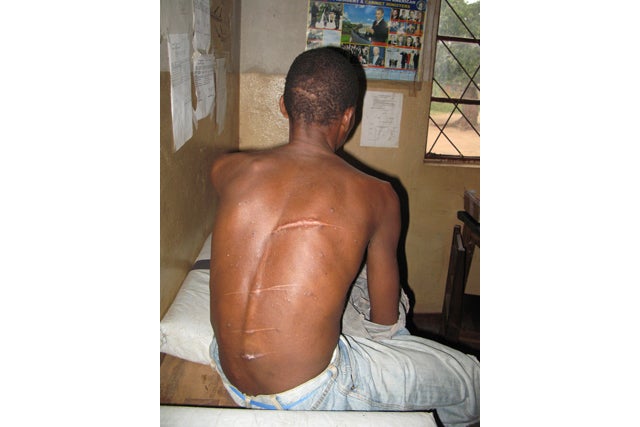
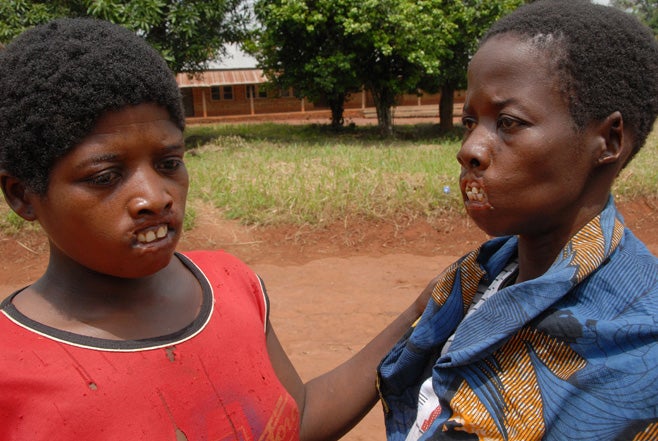
In the December 2009 attacks near Bangadi and Ngilima, LRA combatants horribly mutilated six civilians, cutting off each victim's lips and an ear with a razor. The LRA sent the victims back to their villages with a chilling warning to others that anyone who heard or spoke about the LRA would be similarly punished.

On March 11, 2010, the US Senate unanimously passed the Lord's Resistance Army Disarmament and Northern Uganda Recovery Act. If it becomes law, it will require President Barack Obama's administration to develop a regional strategy to protect civilians in central Africa from attacks by the LRA, to work to apprehend the LRA's leadership, and to support economic recovery for northern Uganda. The bill is currently before the House Committee on Foreign Affairs.

"The people of northeastern Congo and other LRA-affected areas have suffered for far too long," said Van Woudenberg. "The US and other concerned governments should work with the UN and regional parties to develop and carry out a comprehensive strategy to protect civilians and apprehend abusive LRA leaders."

Also available in:
>:>:>:>:>:>:>:>:>:>:>:>:>:>:>:>:>:>


Four Representatives (and you) Hold the Key to LRA Bill's Final Passage

Two weeks ago, the United States Senate unanimously passed the Lord’s Resistance Army Disarmament and Northern Uganda Recovery Act, following a successful activist campaign to overcome one senator’s attempt to block it. The act passed with more bipartisan cosponsors than any Africa-focused legislation in at least three decades, showing the extraordinary results of nationwide lobbying efforts.

If this bill is signed into law, it will constitute the most significant action our leaders have taken to end LRA violence and restore lasting peace in the war’s 24-year history. But before the president can put pen to paper, the House of Representatives must follow the Senate. Getting past this final milestone is going to require one last concerted activist push to add cosponsors to the bill and shore up support from a handful of influential Members of Congress. And all of it has to happen in the next few weeks.

Here’s what you need to know:

First, there are a few key Representatives who lead the House Committee on Foreign Affairs and hold the power to determine the bill’s fate. Before the bill gets voted on by the full House of Representatives, it has to first pass out of committee. So while getting the bill through the House will not require attaining Unanimous Consent, as the Senate bill did, four leaders on the Foreign Affairs Committee nonetheless are able to decide whether or not the bill moves forward. They are Representatives Howard Berman (D-CA), Chair of the Committee on Foreign Affairs; Ileana Ros-Lehtinen (R-FL), Ranking Republican on the Committee on Foreign Affairs; Donald Payne (D-NJ), Chair of the Africa Subcommittee; and Chris Smith (R-NJ), Ranking Republican on the Africa Subcommittee.

Without all four of these representatives in agreement about seeing this bill passed quickly, ensuing political battles could easily result in the bill’s death. Crucially, all four Representatives must also agree to pass identical text as the Senate, to avoid a lengthy process of reconciling the two versions of the bill that could endanger its final passage and would further delay action to stop ongoing LRA atrocities.

None of these four are yet cosponsors of the bill, but Representatives Berman (D-CA) and Payne (D-NJ) have both verbally confirmed that they support passing the Senate version of the bill as quickly as possible. Representatives Ros-Lehtinen (R-FL) and Smith (R-NJ) have remained silent so far. That means that if you live near Miami or central New Jersey, your voice could make a critical difference in seeing the bill passed, and we invite you to join the Rep. Ros-Lehtinen call-in blitz or the Rep. Smith call-in blitz campaigns on Facebook today.

Congresswoman Ros-Lehtinen and Congressman Smith both have longstanding records in support of ending conflict and defending human rights in Africa, so we are hopeful that as they determine their plans they will choose to support the bill’s immediate passage.

Congresswoman Ros-Lehtinen is an outspoken advocate for victims of violence in Darfur, where elements of the LRA recently made an incursion. Congressman Smith has a long history of advocating for an end to LRA atrocities, and even spoke at the first ever Lobby Days for Northern Uganda in 2006. But the time to influence their decisions on this legislation is now, as we expect the Committee to consider the bill in the next three weeks.

The second key to getting the bill through the House of Representatives is to simply add more cosponsors. So far, committed activists have attained 164 bipartisan cosponsors in the House, already an accomplishment of historic proportions. Adding more will only increase the pressure on leaders in the House of Representatives to pass the bill quickly and send a clear signal to President Obama about the urgent need for action. Our goal is to reach 218 cosponsors, or 51 percent of the House.

The best thing you can do to help reach this goal is to sign up now to join our final push for Hometown Shakedown meetings with your Representative in their local office. The Hometown Shakedown was launched November 18, 2009, and since then more than a hundred meetings have taken place that have resulted in dozens of new cosponsors for the bill. Your representatives will be home for the April recess until April 9, which will be the final day of the campaign. So sign up now!

Or, if you are unable to attend or organize a personal meeting, click here to send your representative an email, or here for instructions on making phone calls to his or her office.

This is it: the final push to see this bill passed. If we succeed, President Obama will have to become the first American President in the history of this war to speak publicly about how our country will help put an end to Joseph Kony’s campaign of senseless violence once and for all. We have come so far, so let’s get this done.

>:>:>:>:>:>:>:>:>:>:>:>:>:>:>:>:>:>


March 28, 2010 by Mark Christopher

Source: operation broken silence

Yesterday, Human Right’s Watch released a shocking report concerning a previously unknown killing spree committed by the Lord’s Resistance Army (LRA). You can read the press release concerning the report by clicking here. Also, today the BBC released video footage of the areas the LRA attacked. This most recent, barbaric series of massacres carried out by the LRA forces shows once again the need for a comprehensive regional and international military strategy to better protect civilians, hunt down the LRA leaders, and surround and destroy remaining LRA encampments, primarily in the Central African Republic.

However, new complexities surrounding defeating the LRA have made this task extremely difficult. The Enough Project recently reported that LRA contingents have found refuge in Sudan’s genocide-ravaged Darfur region. The Sudanese government has helped to supply the rebels in the past, and reports that much of the LRA leadership are now safely in Darfur, southern Sudan, and the Central African Republic calls for new measures to be implemented to help protect civilians across the multi-border region from LRA fighters.

A Long List of Actions That Must Be Implemented

The following is a lengthy list of actions we believe must be made by regional and international powers to protect civilians from violence, rebuild areas affected by the LRA, and permanently remove the threat of the rebels from central Africa altogether:

Actions for Regional Powers:

  • The governments of south Sudan, the Central African Republic, Uganda, and the Democratic Republic of the Congo must develop a regional strategy that focuses on rescuing abducted children and protecting at-risk populations from the rebels.
  • Deploy additional troops alongside UN peacekeepers and international monitors into areas where the LRA is active and where civilian populations remain unprotected from the rebels.
  • Work with international relief organizations, the United Nations, and other major world powers that are currently focused on ending the LRA crisis to provide additional radio and cellular equipment to civilians across areas affected by the LRA. This will allow communities that are under attack, threatened by attack, and need additional protection to contact government and UN military forces as needed, while simultaneously creating a “regional watch” for the LRA made up of communities that can help warn each other of impending violence.

Actions for Sudan and South Sudan

  • The national government of Sudan (NCP) must partner with the southern Sudanese army (SPLA) and move against LRA troops based in Sudan’s Darfur region. LRA commanders wanted by the International Criminal Court (ICC) that are captured should be handed over to the Court. Upon attacking LRA contingents in Darfur and south Sudan, both the NCP and SPLA should focus on protecting civilians from retaliatory attacks by remaining LRA forces. This is also an opportunity for both the south and north to work together in a productive fashion, and could offer a chance for Darfur rebel groups in the area to cooperate as well.

Specific Actions for Ugandan Forces Operating Outside of Ugandan Territory

  • Ugandan troops hunting LRA contingents must be better supported and communicated to by the regional UN peacekeeping forces and regional governments. A communications network must be setup to better coordinate joint military efforts by Ugandan forces, regional powers, and UN peacekeepers.
  • Make the protection of civilians, rescue of abducted children and other people, and the prevention of LRA retaliatory strikes central to main objectives when striking LRA targets.

Actions for the United States

  • Continue to support Ugandan military efforts at destroying and dismantling the LRA with increasingly improved intelligence accuracy delivered in a timely fashion. Support Ugandan military efforts, as well as rebuilding the region, through AFRICOM under “the three D’s” — defense, diplomacy and development.
  • Speedily pass the LRA Disarmament and Northern Uganda Recovery Act and ensure full implementation of the actions and funding within it.
  • Leverage the State Department’s knowledge of LRA actions and atrocities committed and publicly condemn them, while simultaneously calling for more international action to end LRA human right’s abuses.

Actions for the United Nations

  • Send additional MONUC peacekeeping troops into northeastern Congo to help prevent LRA and Congolese government forces (FARDC) human right’s abuses.
  • Set up a pan-UN peacekeeping agenda, which includes UNMIS, UNAMID, MINURCAT, and MONUC for helping to protect civilians from the LRA. Within each mission, set up an additional command structure that focuses solely on preventing LRA abuses.
  • If UN peacekeeping troops under MINURCAT are expelled from Chad, reallocate troops and resources into southern Central African Republic to help coordinate efforts to disarm the LRA.
  • Create a demobilization and reintegration program for former LRA combatants that surrender voluntarily.
  • Create additional “surrender zones” for abducted people who have escaped the LRA and for defecting rebels.
  • Work with regional powers to capture LRA commanders wanted by the ICC

For additional actions that can also be taken, please view the report entitled Trail of Death by Human Right’s Watch.

Photo courtesy of Guardian: A UN attack helicopter patrols an area of the Democratic of Congo where LRA rebels were believed to be hiding in 2005

>:>:>:>:>:>:>:>:>:>:>:>:>:>:>:>:>:>

Standing with Darfur

If you want peace, work for justice
إذا كنت تريد السلام ، أعمل من أجل العدالة

StopGenocideNow.org


Tweet this button to read: @JimLangevin Call for a Intelligence Committee special hearing re: #Sudan policy review and demand pressures and consequences #SudanSham

GENOCIDE WILL only STOP WITH US - Our leaders have taught us this


http://www.whitehouse.gov/contact/organizations

Click this post's title to go to Gration's recent posting
about the Darfuri diaspora

and the comments posted

Labels: , , , , , , ,

Sunday, July 19, 2009

INTERNATIONAL JUSTICE MEANS LOCAL JUSTICE

I watched THE RECKONING tonight. It is well worth watching.

It is on PBS' POV (Point of View) as a documentary.

THE RECKONING about the ICC (International Criminal Court online
http://www.pbs.org/video/video/1182396986/program/1154485580

John R. Bolton, George W Bush's United Nations Ambassador hopefully will glaringly prove his flawed thinking on this show. A reminder: The Pledge of Allegiance to the Flag in the USA ends with the following words: "...and liberty and justice for all."

The United States needs to support the ICC. Below the information for the RALLY AT WHITE HOUSE IN SUPPORT OF JUSTICE FOR BASHIR is more information on THE RECKONING.


~~~~~~~~~~~~~~~~~~~~~~~~~~~~~~~~~~~~

JULY 22, 2009

DARFURIS TO RALLY AT WHITE HOUSE IN
SUPPORT OF JUSTICE FOR BASHIR

Protesters to call on Obama administration to act immediately to help bring
justice AND peace to Darfur

WASHINGTON – Darfuris, other Sudanese and Americans who share a common concern about the Obama Administration’s lack of response to the ongoing crimes against humanity in Sudan and Darfur will gather on Wednesday in front of the White House. Participants will deliver a letter to President Obama. From there, participants will walk to the State Department with a letter to the Secretary of State.

The rally is sponsored by the Damanga Coalition for Freedom and Democracy in cooperation with American Darfur activist organizations from across the country. Americans from across the country will also be participating in a National Call-in Day in support of the Darfuri rally. These events are timed to coincide with Special Envoy Gration’s trip to the Sudan and the announcement of the much-anticipated decision on the boundaries of the contested Abyei region. It also falls on the same day as President Obama’s prime time press conference to encourage discussion of Darfur and the ICC case against Bashir at the news conference.

Spokespeople will be available for interviews before, during and after the protest.

WHO: Mohamed Yahya, Executive Director of Damanga Coalition for Freedom and
Democracy, of Washington, DC, originally from West Darfur

WHEN: 1:00PM ET
Wednesday, July 22, 2009

WHERE: Start at Lafayette Square for White House Rally then march to the State Department

WHY: To issue a plea to President Obama and Secretary Clinton
for an unequivocal statement from the United States government in support of the
following:

1. International cooperation with the ICC and its indictments of Omar al-Bashir
2. The immediate deployment of the 26,000 UNAMID Peace Forces to Darfur with a
full Chapter VII mandate, and all necessary support and supplies;
3. Pressure on the Government of Sudan to allow all expelled humanitarian
organizations back into Darfur without any delays or conditions;
4. Strict trade sanctions against Chinese oil companies, and all other companies
investing in Sudanese oil or exporting weapons to Sudan;
5. The end of attacks on Refugee Camps in Chad and Darfur and the return of all
confiscated land to its rightful owners.

REQUESTING HELP
The rally organized by the Damanga Coalition in support of justice and peace in Darfur is planned for this Wednesday - JULY 22, 2009. There are many Darfuris on the East Coast who would like to travel to DC for the day but lack funding for the ground transportation expenses. Susan Morgan of the
Massachusetts Coalition to Save Darfur is working with Damanga and other Darfuri groups to raise enough money to fund vanpools from key locations like NYC, Philadelphia and Virginia. She estimates that with $1000 we would be able to help 30 – 40 Darfuris attend the rally.

If you or your organization is able to contribute (any small amount will help) please respond to her at Susan@paxommunications.org and let her know your pledge amount. Susan will then send you her address to for the check. Checks should be make payable to the Massachusetts Coalition to Save Darfur so that they will be tax deductible. Thanks for any help you may be able to provide.

~~~~~~~~~~~~~~~~~~~~~~~~~~~~~~~

Justice doesn't just happen.

~~~~~~~~~~~~~~~~~~~~~~~~~~~~~~~

THE RECKONING - about the ICC

Film Description

The Reckoning: former child soldiers from the Congo

Former child soldiers of the Thomas Lubanga UPC militia, Ituri, eastern Congo

The Reckoning: The Battle for the International Criminal Court is an epic, nail-biting account of the new International Criminal Court's struggle to prosecute perpetrators — however powerful or concealed they may be — of crimes against humanity as the Court fights to establish its own credibility on the world stage. The film shows the lead-up to the court's most recent and sensational action, the indictment of Sudan's President Omar al-Bashir on March 4, 2009, for crimes against humanity and war crimes. Established by treaty in 2002 in response to the mass atrocities that stained the late 20th century, the International Criminal Court (known as the ICC) is the first permanent international criminal court created to seek justice for victims of genocide, war crimes and crimes against humanity. But the Court, given a historic mandate by its founding 100-plus nations, was not given a police force or other enforcement arm. Moreover, the ICC faces major obstacles in pursuing its mission from nations that did not join the treaty.

The Reckoning: Prosecutor Luis Moreno-Ocampo

Prosecutor Luis Moreno-Ocampo in the International Criminal Court in The Hague, Netherlands

The Reckoning's history of the ICC's founding will be as valuable to those familiar with the story as to those new to it. But the film's central drama concerns events that occurred after 2002. For three years, the filmmakers followed chief ICC Prosecutor Luis Moreno-Ocampo and his team of investigators and prosecutors across four continents as they issued arrest warrants for Lord's Resistance Army leaders in Uganda, put an infamous Congolese warlord on trial, shook up the Colombian justice system and charged Sudan's al-Bashir with crimes against humanity. At every turn, Moreno-Ocampo and crew faced danger, hostility and resistance. The larger drama in The Reckoning is the fate of the ICC itself. Will this tiny court in The Hague succeed against the odds in forging a new paradigm for human rights and justice in the world?

The Reckoning has a mythological opening. A man holding a human skull in a lonely field offers perhaps the most eloquent argument for the ICC. "Without justice," he says, "people have no respect for each other. If this is left unpunished, it will be repeated." He is speaking of the more than 5 million people killed in the wars that have torn eastern Congo apart since 1998. But he might as well have been speaking for the victims of mass murder in Guatemala (200,000), Cambodia (1.7 million), East Timor (200,000), Sierra Leone (50,000), Bosnia (200,000) and Rwanda (800,000), to name only the most notorious cases. It was the horror of these events — and the prospect of more occurring — that brought the world's nations together at the 1998 Rome Conference and set in motion the negotiations that would lead to the ICC's establishment in 2002.

The Reckoning shows that the idea for the Court goes back further, to the Nuremberg Trials of Nazi leaders following World War II, which the United States was the leader in establishing. This connection is uniquely expressed in the film by Ben Ferencz, who, as a 27-year-old lawyer, prosecuted 22 German officers at Nuremberg for murdering over a million people; all were convicted and 13 were sentenced to death. Ferencz never forgot the horror of the Nazi death camps and became a writer on world peace and a tireless campaigner for a permanent tribunal to prosecute crimes against humanity. He recalls the significance of Nuremberg: that the Allies sought justice through rule of law, establishing that no one was above the law and that not only was the killing of civilians a war crime, but the murder of people on the basis of their race, creed or class — genocide — was a crime of the greatest magnitude. Ferencz was there at The Hague on June 16, 2003, when Moreno-Ocampo was sworn in as the first Prosecutor of the new International Criminal Court.

Moreno-Ocampo himself brings unique experience and moral authority to the ICC — and an acute awareness of its historical roots. In 1985, a younger Moreno-Ocampo successfully prosecuted members of the Argentine military junta that, from 1976 to 1983, conducted a "dirty war" of murder, "disappearances" and torture against its political opponents. "It was the first trial of generals since Nuremberg," Moreno-Ocampo notes. Later, as district attorney for the Federal Circuit of the City of Buenos Aires from 1987 to 1992, he prosecuted the military commanders responsible for the Falklands War, the leaders of two military rebellions and dozens of high-profile corruption cases.

Moreno-Ocampo's team includes such savvy lawyers and investigators as former U.S. federal prosecutor Christine Chung, the ICC's first senior trial attorney, who has been a visiting lecturer and senior fellow at the Schell Center for International Human Rights at Yale Law School. She is now a partner at the law firm Quinn Emanuel. Well aware of the obstacles facing the ICC, she describes the Court as a "justice start-up."

Three great powers — China, Russia and the United States — are not members of the Court. The United States actively opposed the Court during the George W. Bush administration. In The Reckoning, former U.S. Ambassador to the United Nations John R. Bolton explains his rationale for the American campaign against it. He doesn't ever want to contemplate U.S. leaders in an international dock. For Bolton, national sovereignty cannot be compromised. For its part, China opposes the ICC arrest warrant indicting Sudanese President al-Bashir, and Russia remains skeptical about it.

The ICC's job, as a court of "last resort," is to support and push national judiciaries to investigate and prosecute alleged crimes against humanity, war crimes and genocide. Only when a country's justice system proves completely incapable of dealing with such crimes, and only when asked, does the ICC step in directly — and then gingerly. Where international justice conflicts with national sovereignty, the ICC must employ both clarity of purpose and political diplomacy.

Thus, in Colombia, where officials "at the highest levels" have been implicated in the political violence ravaging the country, the Court throws its prestige and resources behind Colombian prosecutors who are fighting to investigate the allegations in the face of political opposition. In Congo, by contrast, the Congolese government has asked the ICC to intervene because chaos prevents any credible judicial process. So the ICC investigates and issues its own arrest warrant for Thomas Lubanga Dyilo, a notorious militia leader, for abducting children to serve as his child soldiers. To serve its warrant in Congo, the ICC must rely on local allies, in this case the government — making Dyilo the first war criminal brought to trial at the ICC's headquarters in The Hague.

The Sudan/Darfur case was referred to the ICC by the U.N. Security Council. Since many around the world see Darfur as a clear case of genocide by the Sudanese government against indigenous Darfurians, the government's open defiance of the ICC's warrant for al-Bashir forces the ICC to return to the U.N. Security Council itself to get the international community to bring pressure to arrest al-Bashir. At that point, the clarity provided by law and the U.N. is caught up in murky realpolitik.

In the case of Uganda, an even more difficult contradiction threatens to derail the ICC's work. The government of Uganda asked the ICC to investigate and bring the leaders of a rebel group, the Lord's Resistance Army (LRA), to justice. After 50 investigative missions documenting some 2,200 murders, the ICC prepares to bring warrants when the LRA leaders, clearly worried, try to turn the situation on its head. They come in from the bush, offering negotiations and a new era of peace and stability — but only if the ICC warrants are lifted. After so many years of war and death, even surviving victims of the LRA's worst atrocities find it all but impossible not to take the bait.

ICC prosecutors go on a campaign to convince Ugandans that, in the long run, there will be no peace or stability if the LRA leaders are allowed to get away with their crimes. Ultimately, whether speaking to the august ambassadors of state at the U.N. or to maimed villagers in Uganda, the ICC holds fast to the simple principle spoken by that Congolese man in the field: "Without justice, people have no respect for each other."

Nothing less than a real-life thriller, The Reckoning keeps you on the edge of your seat with two riveting dramas — the prosecution of three cases of unspeakable crimes against humanity and the ICC's fight for its own survival and effectiveness. Senior Trial Attorney Chung reveals the stakes that still hang in the balance when she wonders if the ICC will emerge as an effective institution for justice or simply a symbolic one, a "shadow" of what it was meant to be.

"I started out thinking that The Reckoning would be about the ICC's cases and trials, like any good crime thriller," says director Pamela Yates. "I quickly realized I had to expand the film's vision to include the far-reaching effects the ICC was having at the local level, with the tremendous amount of controversy as well as hope that its investigations were causing. The Court itself became the protagonist of The Reckoning, and all the cinematic elements were developed in realizing this idea."

The Reckoning: The Battle for the International Criminal Court is a production of Skylight Pictures. Visit the filmmakers' site, IJCentral if you want to support the international justice movement and join in their action campaigns.

  • Posted on June 8, 2009
  • Updated on July 17, 2009

ICC Timeline
ICC Timeline
Put the ICC in historical perspective with this multimedia timeline.

Filmmaker Interview
Filmmaker Interview
Filmmakers Pamela Yates and Paco de Onís talk about the challenges of making a film about the ICC.
International Justice and Human Rights
Scholars, human rights organizations and political analysts discuss issues raised by the fil
Q&A with Christine Chung
Former ICC attorney Christine Chung answers questions about the court, the Obama administration’s policy towards the ICC and more

~~~~~~~~~~~~~~~~~~~~~~~

Write to President Obama
http://www.whitehouse.gov/contact/

You can also write to the President at:
The White House
1600 Pennsylvania Avenue NW
Washington, DC 20500

President Obama can be called:

202-456-1111
or
1-800-GENOCIDE

The White House comment line is available
9:00 a.m. - 5:00 p.m. weekdays

~~~~~~~~~~~~~~~~~~~~~~~~~~~~~~~

Find USA elected politicians contact information at this link:
www.usa.gov/Contact/Elected.shtml

~~~~~~~~~~~~~~~~~~~~~~~~~~~~~~~

More Information:

www.stopgenocidenow.org

www.enoughproject.org
www.savedarfur.org
www.eyesondarfur.org

Labels: , , , , , , , , , , , , , , , , ,

Saturday, November 29, 2008

"OVERCOMING POVERTY IS NOT A GESTURE OF CHARITY - IT IS AN ACT OF JUSTICE"

THE TITLE IS A QUOTE OF NELSON MANDELA

Every day that I get hungry because I haven't gotten something to eat while working on a chore or a project, I think of those who only get one snack a day. I know how much better I feel when I take a bite when I am hungry, how it changes my whole outlook, how it affects my mental health as well as my physical being. People who live outdoors, in refugee camps, in insecure places every moment of the day and night don't have the luxury of making this simple change by having an easy bite to eat.

We who are not mindful of our simple luck to have food to eat because we can go to the grocer, drive home with bags of food and put our bread, fruit and cheese....in a refrigerator would serve our own lives better by being mindful. My current sponsored sister in Rwanda (www.womenforwomen.org) has no running water, no electricity, no education and she is raising her children and others' children because there is a need for her to do so.

It is easy to think how woeful our lives are even when we have our basic needs met.

The luxury of having a bed with blankets, food for my body and health is enough to be grateful.


The text below is from www.charity.org

According to the World Bank, 1 billion people currently exist on less than $1.25 a day. For those in developing countries, such absolute poverty is a meager existence. Some are even forced to take desperate measures: In Haiti, people are eating patties made from mud.

Every year, we learn of the personal stories of hundreds of individuals and families who live in absolute poverty—portraits of hardship, hunger, lack of clean water to drink, no access to schools or medical care that are both heart wrenching and inspiring. We won’t soon forget their faces and stories, and we're sure that you won’t either.

Nelson Mandela once said, “Overcoming poverty is not a gesture of charity. It is an act of justice.” Please join Global Impact in righting this injustice by giving a gift of help and hope this holiday season.

Asha, Sudan (Darfur) Shakila and Rahmutullah, Afghanistan
Bosco, Uganda Solange, Rwanda
Judith, Haiti Village of Nga Yoke Kaung, Myanmar
Rita, Ghana

.....................................................................

.....................................................................
World Food Program doing our work for us, but still needs our help
Text by Youtube poster:

24 November 2008 - WFP is increasing its food distributions, not only in the six camps for displaced people near the regional capital, Goma, but also in three camps to the north-west, in territory held by Laurent Nkunda's rebels.

The fighting between the rebels and the Congolese army has heightened the need for food assistance, as hundreds of thousands flee their homes, leaving behind their farms and belongings.

WFP is providing food assistance to a total of 145,000 displaced people near Goma and has completed distributions to almost 100,000 people in Rutshuru and Kiwanja, in rebel-held territory.

A further three camps in rebel-held areas in the Masisi region have received WFP food over the past week. About 25,000 displaced people in two Kitchanga camps and 11,000 in Kilolirwe were provided with rations that will last 30 days.

Persistent insecurity

Despite a pull-back by rebels in the north-east, the persistent insecurity is preventing WFP from reaching many of the displaced. Heavy rains have also hampered food convoys from reaching the towns of Masisi and Lushebere, which are virtually cut off.

We urge all parties in the conflict to put in place mechanisms that will allow humanitarian staff safe and unhindered access to people who are in desperate need, said Carlos Veloso, WFPs Emergency Coordinator for the eastern DRC crisis.

WFP estimates that a total of 1.3 million displaced people and host family members are in need of food assistance in eastern Democratic Republic of Congo.

for more info and updates go to:
www.wfp.org


.....................................................................

.....................................................................
The Greatest Silence: Rape in the Congo
Uploaded by WMMNYC

Rape Victims' Words Help Jolt Congo Into Change

Much of the problem in the Democratice Republic of Congo is an extension of the Rwandan genocide. Some of those who committed the Rwandan genocide went over the border to the Congo when they knew they had to run from Rwanda. And there they continue their sick behavior.

When genocides aren't tended to (Sudan, for example) peace won't just one day "break out". Attention and accountability are needed.

Paralyzed by Fear –
Women Hope for the Violence to End

November 19, 2008, Goma — “I am afraid of the fighting reaching my area. Like all women, I am afraid of being raped,” says Jeanette Yamwerenye, one of the women, who has made it to the Women for Women training in Goma on this November morning. At the age of 28 she has spent half her life surrounded by conflict, poverty, hunger, disease, and uncertainty. Twice Jeanette had to pack her few belongings and run from her home. The last time she was heavily pregnant and gave birth while fleeing the fighting.

Like all women in our program Jeanette is paralyzed with fear of violence and concern over displaced family members. “My parents in law are very old and we don’t know where they are.” From the people who have fled the area north of Goma, where violent clashes have displaced more than 250,000 people, she hears that women and children are being killed.

The women in the classroom are poor and afraid. They don’t want to lose the small gains they have made toward a stable life over the last year. Completing the Women for Women International program is a way to a self-sustaining life that might enable them to support their families with the skills they have learnt.

Marie Jeanne Kabuo is 25 and looks after three children. Last year she was abducted while working on her fields by armed men. They tried to rape her but she managed to escape. Jeanne came to Goma and joined the Women for Women program.

"If the fighting reaches us, people will get killed, women and girls will be raped," she says. "I am praying because I know that there will be so many orphans, widows, and so many people, who had their property looted."

Source: www.womenforwomen.org/global-initiatives-helping-women/help-women-congo

There are Thousands of Women in the DR Congo Who Desperately Need Your Help, Like Honorata.

A Journey from Rape Survivor to Advocate

Honorata Kizende’s past is marked by incredible hardship, horrific violence, social isolation, and near death destruction. And yet, it is also an account of survival, strength, and testimony to human strength.

Honorata had been a sex slave and kept in captivity by armed militias in eastern Congo for almost a year. She was repeatedly gang-raped in public. After she escaped, the stigma of rape made her family reject her. Alone and destitute she found refuge in a friend’s house and was raped again when armed men looted the property. This time her daughter had to watch.

Today Honorata Kizende runs a small tie-die business with a group of women who pooled their resources. And she has decided to break the silence. Honorata is advocating for an end to sexual violence and calls on members of her community to restore the rights of women who have gone through rape and stigmatization.

Source: www.womenforwomen.rg/global-initiatives-helping-women/help-women-congo

Read her story, a journey from victim of sexual slavery to active citizen and advocate.

New York Times: Honorata Speaks Out Against Rape in the Congo

With Your Help Today Women for Women International Can Continue Its Success in the DR Congo

We are making enormous strides in DR Congo, but our work is far from done. The women are filled with hope that you will help them continue to rebuild their lives. You're not only changing the course of one woman's life – you're support and generosity improves entire villages and communities!

In the last two years, we have expanded our program to reach remote villages and have now served over 21,066 women and 113,756 family and community members since our start. Women for Women International program in DR Congo is working:

  • 72% have a greater awareness of their rights;
  • 76.9% report an improved relationship with their family;
  • 80.7% have an improved economic situation;
  • 81.1% of women expressed increased self-confidence; and
  • 80% have greater participation in family decisions;
  • 81.3% have greater participation in family decisions;

"This program has dared me to hope of having a house, of living in peace, of reclaiming my dynamism, my dignity.... I would like to be someone of value again." - Honorata

Source: www.womenforwomen.rg/global-initiatives-helping-women/help-women-congo

Sponsor a Woman Now

Labels: , , , , , , , , , , , , , , ,

Tuesday, September 30, 2008

WHEN YOU LIE UPON YOUR DEATH BED ~ WHAT WILL HAVE BEEN THE IMPORTANT THINGS YOU DID


OR SAID?


To gain and keep perspective in my life, I visualize and feel what I expect to feel if I get to my end knowing my death is soon to be. It instantly makes all things right for me. What will be important then comes front and center and what I once labored or fretted over just loses its grip on me. It won't matter that my family is broken, disconnected or differs from me in their beliefs, politics and ways of handling the truth. What will matter is how I lived my life. What I said, but more how I said... It will matter to me if I chose to be silent when I should have spoken up. Clear and with passion. It will matter to me if I consistently had truth as my anchor, strength and target.

This is one of those things that has my attention. And I feel stories such as these are neglected, dismissed and thrown out while our narcissism consumes our behavior.


The following is from the Enough Project

September 30, 2008

Peace process near collapse in eastern Congo

The peace process in eastern Democratic Republic of the Congo is on the verge of collapse due to resumed hostilities between Government forces and rebels loyal to Congolese general Laurent Nkunda. Absent immediate and robust diplomatic pressure on the Congolese government and a more impartial effort by United Nations peacekeepers to stop the fighting, the region could descend back into total war.

After weeks of tit-for-tat violence, large-scale fighting between the Congolese army and Nkunda's National Congress for the Defense of People, or CNDP, began again on August 28 in the territory of Rutshuru, North Kivu. Violence has since spread to Masisi territory in North Kivu, and Kalehe territory in South Kivu. The clashes are the largest violations to date of the cease-fire agreement signed last January in Goma (capital of North Kivu) between the Congolese government, the CNDP, and 21 other armed groups active in the East.

The fighting has newly displaced an estimated 100,000 civilians in North Kivu, and has curtailed access for humanitarian aid agencies across the province. On September 25, the Enough Project -along with 82 other NGOs-released a statement on the humanitarian costs of faltering peace efforts. This follow-up examines why those diplomatic efforts are failing and what steps the international community must immediately take to halt the violence and reinvigorate the peace process.

  • To read the full statement, click here
  • To read the Congo Advocacy Coalition's September 25 release, click here
  • To join our Raise Hope for Congo Campaign and learn what you can do to help protect and empower Congolese women, click here

Raise Hope for Congo
Check out the Enough Project's website for our new Raise Hope for Congo Campaign

Labels: , , , , , , , , , , , , , , , , , , ,

Sunday, August 17, 2008

A WEAPON OF WAR NEVER IN A MILITARY BUDGET

I have sponsored sisters through www.womenforwomen.org
for years. It is an annual commitment to sponsor her so that she can improve her life, her children's lives and her community ~ and therefore improve the world.
Letters and pictures are exchanged. If you can offer some help, please do.

...............................................

...............................................
WAR
Edwin Starr
Uploaded by cooyah

...............................................

...............................................
Uploaded by WomenforWomenIntl
Women Used as Weapons of War

Remember Darfur
www.darfurolympics.org


Labels: , , , , , , , , , , , , , , , ,

Tuesday, August 5, 2008

RICARDO LEMVO AND MAKINA LOCA IS ONE OF MY FAVORITE BANDS

.......................................................

.......................................................
M'Banza Congo
Uploaded by Cacusso

This is the best quality upload of a Ricardo Lemvo and Makina Loca song on Youtube, currently. I particularly like this song, Sao Salvador from the CD of the same name. However, their typical songs are upbeat, this is one of the rare slow songs. A real gem. I have worn out this cut on my CD, which I purchased at a concert at Waterplace Park in Providence, Rhode Island - the whole band signed all the CDs I purchased. The best $10 CDs ever! I own four of their CDs.


I have never enjoyed dancing more than to this band. The bass, the congos, percussion, the trumpets, keyboard...then there is the singing. It is one of those things that make you glad you are alive.


Ricardo Lemvo and Makina Loca Website

CDs
.......................................................

.......................................................
Ricardo Lemvo and Makina Loca
on the Today Show
Uploaded by pagsonline

Labels: , , , , , , , , , , , , ,