<body>

Monday, July 12, 2010

GENOCIDE, OMAR AL-BASHIR AND JUSTICE - WHO WILL TAKE THE COURAGEOUS STEP TO LEAD TOWARD JUSTICE?


The ICC story should be front page news today in USA newspapers and one of the major stories on network and cable "news" and political networks - what are the chances of that? What per centage of those will cover this story? It is heartbreaking, unacceptable and unforgivable that our USA news media have been complicit in the story being so stagnant and neglected in the reporting world. It is hardly breaking news that we care about what is put in front of our faces. Especially, our politicians need to be told what matters to us and what we want to define us. As Patrick Kennedy told me once in a Darfur lobby meeting with him...."the squeaky wheel gets the grease in Washington, D.C." And as then Senator Lincoln Chafee legislative aids told me in 2006- it is critically important for the USA citizens be many about speaking out to end the Darfur genocide. I said, " I was moved by the streams of people coming up out of the subway stop where I was volunteering...that they didn't have to come, and yet they did." And their response was "But, 'they' do have to come." - implying, or else nothing will happen....Well....nothing has happened and "some" of us have been speaking out for over 6 plus years.

WHAT HAS THE WORLD DONE TO PROTECT THE CURRENT VICTIMS OF GENOCIDE?

~~~~~~~~~~~~~~~~~~~~~~~~~~~~~~~~~~

Press Release: 12.07.2010


Pre-Trial Chamber I issues a second warrant of arrest against Omar Al Bashir for counts of genocide

ICC-CPI-20100712-PR557

Case: The Prosecutor v. Omar Hassan Ahmad Al Bashir
Situation: Darfur, Sudan

Source: www.icc-cpi.int

Also reported here: news.bbc.co.uk

Today, Pre-Trial Chamber I of the International Criminal Court (ICC) issued a second warrant of arrest against the President of Sudan, Omar Hassan Ahmad Al Bashir, considering that there are reasonable grounds to believe him responsible for three counts of genocide committed against the Fur, Masalit and Zaghawa ethnic groups, that include: genocide by killing, genocide by causing serious bodily or mental harm and genocide by deliberately inflicting on each target group conditions of life calculated to bring about the group’s physical destruction.

This second arrest warrant does not replace or revoke in any respect the first warrant of arrest issued against Mr Al Bashir on 4 March, 2009, which shall thus remain in effect. In the previous arrest warrant, the Chamber considered that there are reasonable grounds to believe that Mr Al Bashir is criminally responsible for five counts of crimes against humanity (murder, extermination, forcible transfer, torture and rape) and two counts for war crimes (intentionally directing attacks against a civilian population as such or against individual civilians not taking direct part in hostilities, and pillaging).

On 4 March, 2009, Pre-Trial Chamber I had rejected the Prosecutor’s application in respect of the crime of genocide. On 6 July, 2009, the Prosecutor filed an appeal against this decision. On 3 February, 2010, the Appeals Chamber rendered its judgment on the Prosecutor’s appeal, reversing, by unanimous decision, Pre-Trial Chamber I’s decision of 4 March, 2009, to the extent that Pre-Trial Chamber I decided “not to issue a warrant of arrest in respect of the charge of genocide in view of an erroneous standard of proof”. The Appeals Chamber directed the Pre-Trial Chamber to decide anew whether or not the arrest warrant should be extended to cover the charge of genocide. Applying the standard of proof as identified by the Appeals Chamber, Pre-Trial Chamber I concluded today that there are reasonable grounds to believe that Mr Al Bashir acted with specific intent to destroy in part the Fur, Masalit and Zaghawa ethnic groups.

Pre-Trial Chamber I requests the Registrar of the Court to prepare a supplementary request for co-operation seeking the arrest and surrender of Mr Al Bashir for the counts contained in both the first and the second warrant of arrest, and transmit such a request to the competent Sudanese authorities, to all States Parties to the Rome Statute, and to all the United Nations Security Council members that are not States Parties to the Statute. The Registrar is also directed to transmit additional requests for the arrest and surrender of Omar Al Bashir to the Court to any other State as may be necessary.

The situation in Darfur was referred to the International Criminal Court by the United Nations Security Council’s resolution 1593, on 31 March, 2005. In this situation, four cases are being heard: The Prosecutor v. Ahmad Muhammad Harun (“Ahmad Harun”) and Ali Muhammad Ali Abd-Al-Rahman (“Ali Kushayb”); The Prosecutor v. Omar Hassan Ahmad Al Bashir; The Prosecutor v. Bahar Idriss Abu Garda and The Prosecutor v. Abdallah Banda Abakaer Nourain and Saleh Mohammed Jerbo Jamus.

The International Criminal Court is the only permanent international court established with the mission to help put an end to impunity for the perpetrators of the most serious crimes of concern to the international community as a whole, namely the crime of genocide, crimes against humanity and war crimes, and thus to contribute to the prevention of such crimes.

Decision on the Prosecution's Application for a Warrant of Arrest against Omar Hassan Ahmad Al Bashir

Second Decision on the Prosecution's Application for a Warrant of Arrest

Judgment on the appeal of the Prosecutor against the "Decision on the Prosecution's Application for a Warrant of Arrest against Omar Hassan Ahmad Al Bashir"

Warrant of Arrest for Omar Hassan Ahmad Al Bashir

Second warrant of arrest for Omar Hassan Ahmad Al Bashir

Case information sheet "The Prosecutor v. Omar Hassan Ahmad Al Bashir"

~~~~~~~~~~~~~~~~~~~~~~~~~~~~~

The Save Darfur Coalition welcomes today’s decision by the International Criminal Court judges and highlights that justice and accountability are critical components of a comprehensive solution to the crisis in Darfur. SCD also urges the Obama administration to immediately make clear to the Government of Sudan that any retaliation against civilians, aid workers or UN personnel will not be tolerated. The US and international community should vigilantly monitor the humanitarian and human rights situation in Sudan and work to prevent and, if necessary, swiftly respond to any such retaliatory acts

What the decision means:
  • While the ICC arrest warrants for al-Bashir certainly add some legal weight to our long-held conviction that Omar al-Bashir is responsible for grave crimes against civilians in Darfur, today’s decision by the ICC judges does not mean that the ICC has declared genocide has occurred or is occurring in Darfur.

  • Al-Bashir would need to appear before the ICC judges, have his charges confirmed in an initial hearing, then face trial for and be found guilty of genocide before we could say that the ICC judges have determined that Omar al-Bashir committed genocide in Darfur or that genocide has occurred in Darfur.

What should be done:

  • The Obama Administration must immediately make clear to the Government of Sudan that any reaction to today’s news that threatens civilians, aid workers or peacekeepers in Darfur will not be tolerated. After the first ICC arrest warrant was announced last March, Bashir expelled over a dozen international aid groups and disbanded three Sudanese aid organizations, forcing an emergency response from the United Nations and international community to prevent a humanitarian catastrophe in Darfur.
  • The US and international community must vigilantly monitor the humanitarian and human rights situation in Sudan and swiftly respond to any threats or acts of violence or other repression against civilians, aid workers or peacekeepers.
  • The United States government should reaffirm its support for the ICC’s pursuit of justice in Darfur and should work together with UN Security Council and ICC member states to ensure the enforcement of this and all ICC arrest warrants for those accused of atrocities in Darfur, including al-Bashir.

Save Darfur Coalition's blog will have more throughout the day: http://blogfordarfur.org/

~~~~~~~~~~~~~~~~~~~~~~~~~~~~~

RIGHTS GROUPS RESPOND TO NEW “GENOCIDE” ARREST WARRANT FOR PRESIDENT BASHIR

International community must bring Bashir and other indictees to justice and prevent violent retaliation by Bashir regime

WASHINGTON, D.C.Four human rights advocacy organizations - the Enough Project at the Center for American Progress, Genocide Intervention Network, the Save Darfur Coalition, and the American Jewish World Service - jointly issued the following statement in response.

The issuance of a second arrest warrant for President Al-Bashir for three counts of genocide requires the international community to fully support the ICC and renew its efforts to apprehend him and all others wanted by the ICC for crimes committed in Darfur. The Government of Sudan should immediately turn over President al-Bashir to face trial in The Hague. Barring this unlikely cooperation, the United States and the international community should work together to ensure Bashir’s swift arrest.

After the ICC issued the first warrant for al-Bashir’s arrest in March 2009, President Bashir evicted more than a dozen international aid groups from Sudan, putting thousands of lives at risk. The international community did little to challenge this retaliation, and critically needed services, including aid for survivors of sexual violence, were lost and never replaced in Darfur. President Obama, the UN Security Council, and other world leaders must make it clear to President Bashir that any new retaliation against humanitarian efforts will be met with clear consequences. Sudanese civilians should not be targeted as justice is pursued for those who have died and suffered in Darfur.

The Bashir regime's decades of crimes must end. While risk of a return to full-scale, national war grows and a referendum for southern Sudanese self-determination draws near, the Obama administration should put in action the consequences and pressures it promised for the lack of measurable progress and continued backsliding on key benchmarks by the Government of Sudan and other parties. The United States also needs to intensify its diplomatic efforts to find a path to peace in Sudan, with support from President Obama and other senior members of his foreign policy team.

“Accountability is a fundamental component of sustainable peace in Sudan,” says John Prendergast, Co-Founder of the Enough Project. “President Obama should make abundantly clear his unequivocal support for peace rooted in justice in Sudan by sending the message that consequences will result from any retaliation against Sudanese civilians as a result of this warrant, and by building stronger international support for this warrant.”

“The American people are expecting President Obama to fulfill his campaign promises and forcefully support the ICC and protect civilians in Sudan,” says Mark Hanis, President of the Genocide Intervention Network. “The United States government should reaffirm its support for the ICC’s pursuit of justice in Darfur and should work together with UN Security Council and ICC member states to ensure the swift enforcement of this and all ICC arrest warrants for those accused of atrocities in Darfur, including al-Bashir.”

“The United States and broader international community must vigilantly monitor for any threats or acts of violence or other repression against civilians, Sudanese human rights activists, aid workers or peacekeepers,” says Mark Lotwis, Acting President of the Save Darfur Coalition. “While pushing for al-Bashir’s apprehension, the Obama administration must lead efforts to prevent a repeat of the merciless and cruel retaliation by the Khartoum regime last year.”

“Today’s decision comes at a perilous time for the Sudanese people,” said American Jewish World Service (AJWS) president Ruth Messinger. “The Obama administration’s vigilance in implementing the accountability mechanisms central to its Sudan policy is critical to ensure this decision is not used as a pretext to punish civilians and interrupt life-saving aid.”


~~~~~~~~~~~~~~~~~~~~~~~~~~~~~

Daily Actions

from http://www.stopgenocidenow.org/daily-actions

Check back weekly for updated things you can do!

It will only take you 5 minutes a day to have an impact on millions of lives.

Obama Administration: Don’t Be AWOL on Justice for Sudan!

Today the International Criminal Court issued a second arrest warrant for Sudanese President Omar al awol.jpgBashir – it has now added charges of three counts of genocide to his previous seven counts of war crimes and crimes against humanity. It is the first time ever the Court has issued an arrest warrant for genocide.

Yesterday President Obama called for the prosecution and arrest of those that carried out the genocide in Srebrenica, Bosnia-Herzegovina 15 years ago, saying “there can be no lasting peace without justice.”

Why, then, does he remain AWOL on justice for Sudan?

Take Action! 
 Please do one or more of the easy, suggested actions to tell President Obama, “Do Not Be AWOL on Justice for Sudan!”

On Facebook:

Leave messages for President Obama (you’ll have to click the “like” but ton on the page first) and tell him:

Following the ICC’s arrest warrant against Sudan’s President Omer al Bashir, the US government must do everything in its power to support the ICC’s effort to bring justice to Sudan, to renew the international community’s efforts to apprehend Bashir, and to prevent retaliation against innocent civilians in Sudan. President Obama, don’t be AWOL on justice in Sudan!” http://tinyurl.com/382jldx

By Phone:

Call the President Obama at 202-456-1111 (9 AM – 5 PM EST, M-F) and tell him:

“My name is ________, and I’m calling from ____________. Following the ICC arrest warrant for genocide against President Bashir, the US government should do everything in its power to support the ICC’s effort to bring justice to Sudan, to renew the international community’s efforts to apprehend Bashir and to prevent retaliation against innocent civilians in Sudan. Mere words of condemnation will not work any longer – the people of Sudan need real pressure on their government and full cooperation with the ICC. Don’t be AWOL on justice in Sudan!”

On Twitter:


ACTIONS YOU CAN DO
from Save Darfur Coaltion

1) Call the State Department at 202-647-4000 and ask that the US government do everything in its power to prevent retaliation against innocent civilians in Sudan.

2) Spread the word about & show public support for this new arrest warrant.

a. Tweet about it:

The ICC issues a 2nd arrest warrant for Omar al-Bashir - for crimes of #genocide http://ow.ly/2aaO0 #Sudan cc: @statedept & @whitehouse

// or cc reporters and news agencies.

b. Post a link to the ICC’s press release on your Facebook page: http://www.icc-cpi.int/menus/icc/press%20and%20media/press%20releases/pr557

c. Send an email to your list. Include the quote from the press release: “there are reasonable grounds to believe [Omar al-Bashir] responsible for three counts of genocide committed against the Fur, Masalit and Zaghawa ethnic groups, that include: genocide by killing, genocide by causing serious bodily or mental harm and genocide by deliberately inflicting on each target group conditions of life calculated to bring about the group’s physical destruction.”

3) Support members of the Sudanese Diaspora gathering on Wednesday July 14, 2010 to protest Bashir’s continued flaunting of international justice. More about the DC event is available here: http://blogfordarfur.org/archives/4655

Save Darfur is putting together a petition that will be emailed out later today, and GI-Net is updating 1-800-GENOCIDE with talking points. I’ll let you know when that is all available.

~~~~~~~~~~~~~~~~~~~~~~~~~~~~~~~~

Sandra Hammel

Use Your Voice to Stop Genocide RI
Genocide will only stop with us demanding it - Our leaders have taught us this
"The most important things belong first, not last or never."
Words of the Earth by Cedric Wright

If you want peace, work for justice

إذا كنت تريد السلام ، أعمل من أجل العدالة

President Obama: 202-456-1111 or 1-800-GENOCIDE

our humanity in the balance

Labels: , , , , , , , ,

Sunday, March 28, 2010

WHERE DO YOU STAND ON HUMAN BEINGS BEING TREATED HUMANELY?

This post is taken from Human Rights Watch and is a new report of what has been happening in eastern Congo and may very well be the news we will be reading about Sudan soon (from responsible media outlets who still report international news), as this group is active in Sudan as well. The LRA, Lords Resistance Army, has a well-established reputation and yet it is business as usual from the international community in not doing anything.

Full credit for this article: www.hrw.org/en/news/2010/03/28/dr-congo-lord-s-resistance-army-rampage-kills-321

Regional Strategy Needed to End Rebel Group’s Atrocities and Apprehend Leaders

The Makombo massacre is one of the worst ever committed by the LRA in its bloody 23-year history, yet it has gone unreported for months. The four-day rampage demonstrates that the LRA remains a serious threat to civilians and is not a spent force, as the Ugandan and Congolese governments claim.

Anneke Van Woudenberg, senior Africa researcher

(Kampala) - The rebel Lord's Resistance Army (LRA) killed at least 321 civilians and abducted 250 others, including at least 80 children, during a previously unreported four-day rampage in the Makombo area of northeastern Democratic Republic of Congo in December 2009, Human Rights Watch said in a report released today.

"The Makombo massacre is one of the worst ever committed by the LRA in its bloody 23-year history, yet it has gone unreported for months," said Anneke Van Woudenberg, senior Africa researcher at Human Rights Watch. "The four-day rampage demonstrates that the LRA remains a serious threat to civilians and is not a spent force, as the Ugandan and Congolese governments claim."

The 67-page report, "Trail of Death: LRA Atrocities in Northeastern Congo," is the first detailed documentation of the Makombo massacre and other atrocities by the LRA in Congo in 2009 and early 2010. The report, based on a Human Rights Watch fact-finding mission to the massacre area in February, documents the brutal killings during the well-planned LRA attack from December 14 to 17 in the remote Makombo area of Haute Uele district.

LRA forces attacked at least 10 villages, capturing, killing, and abducting hundreds of civilians, including women and children. The vast majority of those killed were adult men, whom LRA combatants first tied up and then hacked to death with machetes or crushed their skulls with axes and heavy wooden sticks. The dead include at least 13 women and 23 children, the youngest a 3-year-old girl who was burned to death. LRA combatants tied some of the victims to trees before crushing their skulls with axes.

The LRA also killed those they abducted who walked too slowly or tried to escape. Family members and local authorities later found bodies all along the LRA's 105-kilometer journey through the Makombo area and the small town of Tapili. Witnesses interviewed by Human Rights Watch said that for days and weeks after the attack, this vast area was filled with the "stench of death."

Children and adults who managed to escape provided similar accounts of the group's extreme brutality. Many of the children captured by the LRA were forced to kill other children who had disobeyed the LRA's rules. In numerous cases documented by Human Rights Watch, children were ordered to surround the victim in a circle and take turns beating the child on the head with a large wooden stick until the child died.

The United Nations Peacekeeping Mission in Congo (MONUC) has some 1,000 peacekeeping troops in the LRA-affected areas of northeastern Congo - far too few to protect the population adequately, given the area's size. Yet instead of sending more troops, the peacekeeping force, under pressure from the Congolese government to withdraw from the country by July 2011, is considering removing some troops from the northeast by June in the first phase of its drawdown.

"The people of northeastern Congo are in desperate need of more protection, not less," said Van Woudenberg. "The UN Security Council should stop any drawdown of MONUC peacekeeping troops from areas where the LRA threatens to kill and abduct civilians."

In mid-April, the Security Council is due to visit Congo to discuss the peacekeeping force's plans for withdrawal and the protection of civilians.

The Makombo massacre is part of a longstanding history of atrocities and abuse by the LRA in Uganda, southern Sudan, the Central African Republic (CAR), and Congo. Pushed out of northern Uganda in 2005, the LRA now operates in the remote border area between southern Sudan, Congo, and CAR. In July 2005, the International Criminal Court issued arrest warrants for the senior leaders of the LRA for crimes they committed in northern Uganda, but those indicted remain at large.

The Human Rights Watch research indicated that the Makombo massacre was perpetrated by two LRA commanders - Lt. Col. Binansio Okumu (also known as Binany) and a commander known as Obol. They report to Gen. Dominic Ongwen, a senior LRA leader who is believed to command the LRA's forces in Congo and who is among those sought by the International Criminal Court. Human Rights Watch urged investigations of these commanders' alleged participation in war crimes and crimes against humanity.

In December 2008, the governments of the region, led by the Ugandan armed forces, with intelligence and logistical support from the United States, began a military campaign known as Operation Lightning Thunder against the LRA in northeastern Congo. A surprise aerial strike on the main LRA camp failed to neutralize the LRA leadership, which escaped. In retaliation, the LRA attacked villages and towns in northern Congo and southern Sudan, killing more than 865 civilians during the Christmas 2008 holiday season and in the weeks thereafter.

On March 15, 2009, Operation Lightning Thunder officially ended, following pressure from the Congolese government, which found it politically difficult to support a continued Ugandan army presence on Congolese territory. But a covert joint military campaign continued, with the quiet approval of the Congolese president, Joseph Kabila. Both governments publicly maintain that the LRA is no longer a serious threat in Congo and that the bulk of the rebel group has either moved to Central African Republic or has been killed or dispersed.

These public declarations might have contributed to burying information about ongoing LRA attacks, leaving many victims feeling abandoned. An 80-year-old traditional chief, whose son was killed during the Makombo massacre, told Human Rights Watch: "We have been forgotten. It's as if we don't exist. The government says the LRA are no longer a problem, but I know that's not true. I beg of you, please talk to others about what has happened to us."

While the Makombo massacre is the most deadly documented attack by the LRA since the Christmas massacres of 2008, dozens of attacks against civilians have also been carried out in other areas in recent months - near the towns of Bangadi and Ngilima in Haut Uele district, in Ango territory in Bas Uele district, as well as in the Central African Republic.

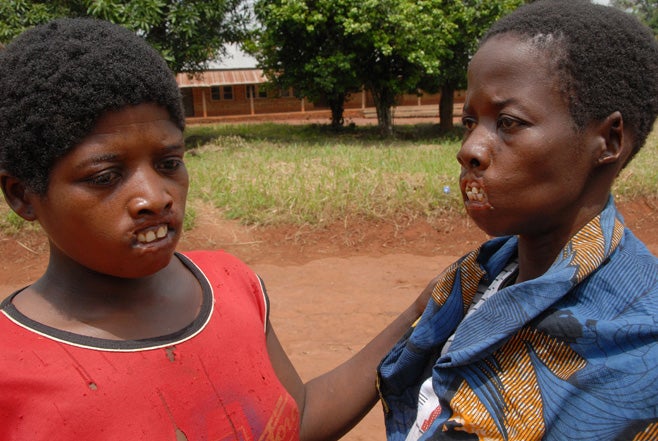
In the December 2009 attacks near Bangadi and Ngilima, LRA combatants horribly mutilated six civilians, cutting off each victim's lips and an ear with a razor. The LRA sent the victims back to their villages with a chilling warning to others that anyone who heard or spoke about the LRA would be similarly punished.

On March 11, 2010, the US Senate unanimously passed the Lord's Resistance Army Disarmament and Northern Uganda Recovery Act. If it becomes law, it will require President Barack Obama's administration to develop a regional strategy to protect civilians in central Africa from attacks by the LRA, to work to apprehend the LRA's leadership, and to support economic recovery for northern Uganda. The bill is currently before the House Committee on Foreign Affairs.

"The people of northeastern Congo and other LRA-affected areas have suffered for far too long," said Van Woudenberg. "The US and other concerned governments should work with the UN and regional parties to develop and carry out a comprehensive strategy to protect civilians and apprehend abusive LRA leaders."

Also available in:
>:>:>:>:>:>:>:>:>:>:>:>:>:>:>:>:>:>


Four Representatives (and you) Hold the Key to LRA Bill's Final Passage

Two weeks ago, the United States Senate unanimously passed the Lord’s Resistance Army Disarmament and Northern Uganda Recovery Act, following a successful activist campaign to overcome one senator’s attempt to block it. The act passed with more bipartisan cosponsors than any Africa-focused legislation in at least three decades, showing the extraordinary results of nationwide lobbying efforts.

If this bill is signed into law, it will constitute the most significant action our leaders have taken to end LRA violence and restore lasting peace in the war’s 24-year history. But before the president can put pen to paper, the House of Representatives must follow the Senate. Getting past this final milestone is going to require one last concerted activist push to add cosponsors to the bill and shore up support from a handful of influential Members of Congress. And all of it has to happen in the next few weeks.

Here’s what you need to know:

First, there are a few key Representatives who lead the House Committee on Foreign Affairs and hold the power to determine the bill’s fate. Before the bill gets voted on by the full House of Representatives, it has to first pass out of committee. So while getting the bill through the House will not require attaining Unanimous Consent, as the Senate bill did, four leaders on the Foreign Affairs Committee nonetheless are able to decide whether or not the bill moves forward. They are Representatives Howard Berman (D-CA), Chair of the Committee on Foreign Affairs; Ileana Ros-Lehtinen (R-FL), Ranking Republican on the Committee on Foreign Affairs; Donald Payne (D-NJ), Chair of the Africa Subcommittee; and Chris Smith (R-NJ), Ranking Republican on the Africa Subcommittee.

Without all four of these representatives in agreement about seeing this bill passed quickly, ensuing political battles could easily result in the bill’s death. Crucially, all four Representatives must also agree to pass identical text as the Senate, to avoid a lengthy process of reconciling the two versions of the bill that could endanger its final passage and would further delay action to stop ongoing LRA atrocities.

None of these four are yet cosponsors of the bill, but Representatives Berman (D-CA) and Payne (D-NJ) have both verbally confirmed that they support passing the Senate version of the bill as quickly as possible. Representatives Ros-Lehtinen (R-FL) and Smith (R-NJ) have remained silent so far. That means that if you live near Miami or central New Jersey, your voice could make a critical difference in seeing the bill passed, and we invite you to join the Rep. Ros-Lehtinen call-in blitz or the Rep. Smith call-in blitz campaigns on Facebook today.

Congresswoman Ros-Lehtinen and Congressman Smith both have longstanding records in support of ending conflict and defending human rights in Africa, so we are hopeful that as they determine their plans they will choose to support the bill’s immediate passage.

Congresswoman Ros-Lehtinen is an outspoken advocate for victims of violence in Darfur, where elements of the LRA recently made an incursion. Congressman Smith has a long history of advocating for an end to LRA atrocities, and even spoke at the first ever Lobby Days for Northern Uganda in 2006. But the time to influence their decisions on this legislation is now, as we expect the Committee to consider the bill in the next three weeks.

The second key to getting the bill through the House of Representatives is to simply add more cosponsors. So far, committed activists have attained 164 bipartisan cosponsors in the House, already an accomplishment of historic proportions. Adding more will only increase the pressure on leaders in the House of Representatives to pass the bill quickly and send a clear signal to President Obama about the urgent need for action. Our goal is to reach 218 cosponsors, or 51 percent of the House.

The best thing you can do to help reach this goal is to sign up now to join our final push for Hometown Shakedown meetings with your Representative in their local office. The Hometown Shakedown was launched November 18, 2009, and since then more than a hundred meetings have taken place that have resulted in dozens of new cosponsors for the bill. Your representatives will be home for the April recess until April 9, which will be the final day of the campaign. So sign up now!

Or, if you are unable to attend or organize a personal meeting, click here to send your representative an email, or here for instructions on making phone calls to his or her office.

This is it: the final push to see this bill passed. If we succeed, President Obama will have to become the first American President in the history of this war to speak publicly about how our country will help put an end to Joseph Kony’s campaign of senseless violence once and for all. We have come so far, so let’s get this done.

>:>:>:>:>:>:>:>:>:>:>:>:>:>:>:>:>:>


March 28, 2010 by Mark Christopher

Source: operation broken silence

Yesterday, Human Right’s Watch released a shocking report concerning a previously unknown killing spree committed by the Lord’s Resistance Army (LRA). You can read the press release concerning the report by clicking here. Also, today the BBC released video footage of the areas the LRA attacked. This most recent, barbaric series of massacres carried out by the LRA forces shows once again the need for a comprehensive regional and international military strategy to better protect civilians, hunt down the LRA leaders, and surround and destroy remaining LRA encampments, primarily in the Central African Republic.

However, new complexities surrounding defeating the LRA have made this task extremely difficult. The Enough Project recently reported that LRA contingents have found refuge in Sudan’s genocide-ravaged Darfur region. The Sudanese government has helped to supply the rebels in the past, and reports that much of the LRA leadership are now safely in Darfur, southern Sudan, and the Central African Republic calls for new measures to be implemented to help protect civilians across the multi-border region from LRA fighters.

A Long List of Actions That Must Be Implemented

The following is a lengthy list of actions we believe must be made by regional and international powers to protect civilians from violence, rebuild areas affected by the LRA, and permanently remove the threat of the rebels from central Africa altogether:

Actions for Regional Powers:

  • The governments of south Sudan, the Central African Republic, Uganda, and the Democratic Republic of the Congo must develop a regional strategy that focuses on rescuing abducted children and protecting at-risk populations from the rebels.
  • Deploy additional troops alongside UN peacekeepers and international monitors into areas where the LRA is active and where civilian populations remain unprotected from the rebels.
  • Work with international relief organizations, the United Nations, and other major world powers that are currently focused on ending the LRA crisis to provide additional radio and cellular equipment to civilians across areas affected by the LRA. This will allow communities that are under attack, threatened by attack, and need additional protection to contact government and UN military forces as needed, while simultaneously creating a “regional watch” for the LRA made up of communities that can help warn each other of impending violence.

Actions for Sudan and South Sudan

  • The national government of Sudan (NCP) must partner with the southern Sudanese army (SPLA) and move against LRA troops based in Sudan’s Darfur region. LRA commanders wanted by the International Criminal Court (ICC) that are captured should be handed over to the Court. Upon attacking LRA contingents in Darfur and south Sudan, both the NCP and SPLA should focus on protecting civilians from retaliatory attacks by remaining LRA forces. This is also an opportunity for both the south and north to work together in a productive fashion, and could offer a chance for Darfur rebel groups in the area to cooperate as well.

Specific Actions for Ugandan Forces Operating Outside of Ugandan Territory

  • Ugandan troops hunting LRA contingents must be better supported and communicated to by the regional UN peacekeeping forces and regional governments. A communications network must be setup to better coordinate joint military efforts by Ugandan forces, regional powers, and UN peacekeepers.
  • Make the protection of civilians, rescue of abducted children and other people, and the prevention of LRA retaliatory strikes central to main objectives when striking LRA targets.

Actions for the United States

  • Continue to support Ugandan military efforts at destroying and dismantling the LRA with increasingly improved intelligence accuracy delivered in a timely fashion. Support Ugandan military efforts, as well as rebuilding the region, through AFRICOM under “the three D’s” — defense, diplomacy and development.
  • Speedily pass the LRA Disarmament and Northern Uganda Recovery Act and ensure full implementation of the actions and funding within it.
  • Leverage the State Department’s knowledge of LRA actions and atrocities committed and publicly condemn them, while simultaneously calling for more international action to end LRA human right’s abuses.

Actions for the United Nations

  • Send additional MONUC peacekeeping troops into northeastern Congo to help prevent LRA and Congolese government forces (FARDC) human right’s abuses.
  • Set up a pan-UN peacekeeping agenda, which includes UNMIS, UNAMID, MINURCAT, and MONUC for helping to protect civilians from the LRA. Within each mission, set up an additional command structure that focuses solely on preventing LRA abuses.
  • If UN peacekeeping troops under MINURCAT are expelled from Chad, reallocate troops and resources into southern Central African Republic to help coordinate efforts to disarm the LRA.
  • Create a demobilization and reintegration program for former LRA combatants that surrender voluntarily.
  • Create additional “surrender zones” for abducted people who have escaped the LRA and for defecting rebels.
  • Work with regional powers to capture LRA commanders wanted by the ICC

For additional actions that can also be taken, please view the report entitled Trail of Death by Human Right’s Watch.

Photo courtesy of Guardian: A UN attack helicopter patrols an area of the Democratic of Congo where LRA rebels were believed to be hiding in 2005

>:>:>:>:>:>:>:>:>:>:>:>:>:>:>:>:>:>

Standing with Darfur

If you want peace, work for justice
إذا كنت تريد السلام ، أعمل من أجل العدالة

StopGenocideNow.org


Tweet this button to read: @JimLangevin Call for a Intelligence Committee special hearing re: #Sudan policy review and demand pressures and consequences #SudanSham

GENOCIDE WILL only STOP WITH US - Our leaders have taught us this


http://www.whitehouse.gov/contact/organizations

Click this post's title to go to Gration's recent posting
about the Darfuri diaspora

and the comments posted

Labels: , , , , , , ,

Friday, July 25, 2008

MEDIA FAILS HUMANS

“We are visitors on this planet.
We are here for ninety or one hundred years
at the very most.
During that period,
we must try to do something good ,
something useful, with our lives.

If you contribute to other people’s happiness,
You will find the true goal, the true meaning of life.

H.H. the 14th Dalai Lama

...........................

Anup Shah, Poverty Facts and Stats, GlobalIssues.org, Last updated: Tuesday, March 04, 2008

...........................

Below is copied from the above website link.

Who am I, why am I doing this? (not me...a kindred spirit, though)

I am Anup Shah, the editor of this web site. My roots lie in India, via my grandparents—my parents grew up in East Africa. Born in 1974, I grew up in England for 23 years and then got the opportunity to work in the USA for almost four years. In June 2001, I moved back to England.

Living and working in the US was an amazing experience for me. However, I quickly became concerned at what appeared to be rather poor quality mainstream media. International coverage appeared incredibly lacking and when available, very narrow. And so, in mid-1998 this web site (initially just something to do in order to learn about developing web sites!) started.

The mainstream media is one of the most important aspects of a functioning and participatory democracy. It helps us form our views of the world around us, influence our opinion and let us learn about all manner of things we may otherwise never come across. It is incredibly beneficial, but in today’s world it also has real problems. Just as good quality and diverse mainstream media enhances democracy, poor quality and narrow mainstream media can negatively impact democracy.

............................

If you read my previous post, you know I so agree with Anup Shah. The internet is used for many things. And gratefully, those who have knowledge of how to use it, does include those with compassion, a desire to do something to better our life on the whole by helping people one by one. It won't happen without our participation.

This is worth your time:
www.globalissues.org

This was taken from his front page:
“If a man is offered a fact which goes against his instincts, he will scrutinize it closely, and unless the evidence is overwhelming, he will refuse to believe it. If, on the other hand, he is offered something which affords a reason for acting in accordance to his instincts, he will accept it even on the slightest evidence.” — Bertrand Russell, Roads to Freedom

This website is right where my heart is
www.globalissues.org/about/why
...this is how we live a life that is with purpose

RSS for Global Issues.org explains about RSS Web Feed and other things:
www.globalissues.org/rss


Labels: , , , , , , , , , , , , , , , ,