<body>

Friday, February 24, 2012

WITH LOVE LIKE THAT - GREY VILLET MEMORIALIZED RICHARD AND MILDRED LOVING'S LOVE


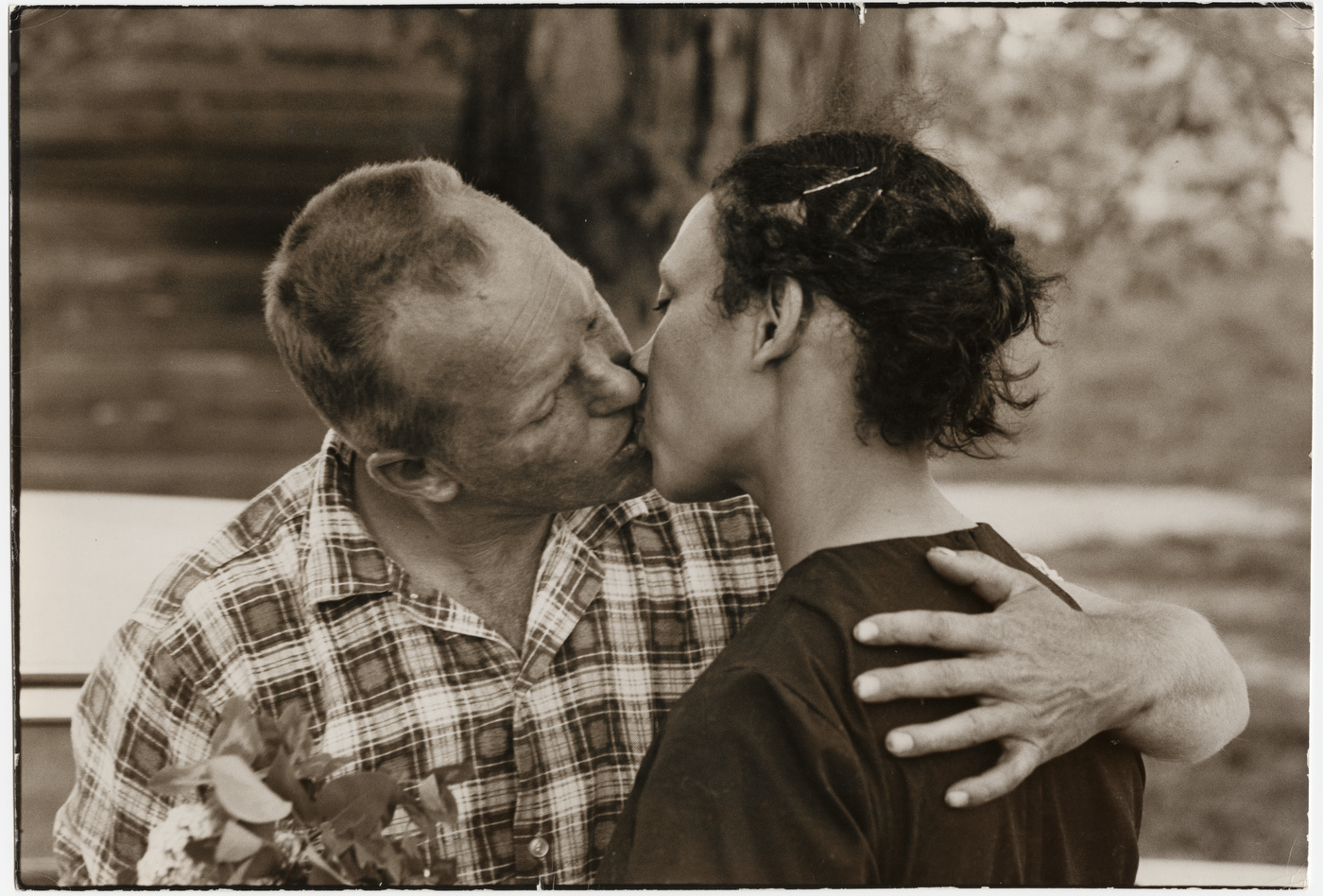
Mildred and Richard Loving
April 1965
Photo credit ~ Grey Villet

Mildred and Richard Loving
April 1965
Photo credit ~ Grey Villet


Mildred Loving
Photo credit ~ Grey Villet

Mildred and Richard Loving
April 1965
Photo credit ~ Grey Villet

Mildred and Richard Loving
April 1965
Photo credit ~ Grey Villet

Mildred and Richard Loving
April 1965
Photo credit ~ Grey Villet


Mildred and Richard Loving
April 1965
Photo credit ~ Grey Villet

Mildred and Richard Loving
April 1965
Photo credit ~ Grey Villet

Mildred and Richard Loving
April 1965
Photo credit ~ Grey Villet

In 1958, Richard and Mildred Loving were arrested in a nighttime raid in their bedroom by the sheriff of Caroline County, Va. Their crime: being married to each other. The Lovings — Mildred, who was of African-American and Native American descent, and Richard, a bricklayer with a blond buzz cut — were ordered by a judge to leave Virginia for 25 years. This month, the International Center of Photography is mounting a show of Grey Villet’s photographs of the couple in 1965. That exhibit is complemented by an HBO documentary, ‘‘The Loving Story,’’ directed by Nancy Buirski, which will be shown on HBO on Feb. 14. The film tells of the Lovings’ struggle to return home after living in exile in Washington, where Mildred, gentle in person but persistent on paper, wrote pleading letters to Robert F. Kennedy and the A.C.L.U. Two lawyers took their case to the Supreme Court, which struck down miscegenation laws in more than a dozen states. The Lovings’ belief in the simple rightness of their plea never wavered. Asked by one of his lawyers if he had a message for the Supreme Court, Richard said he did: ‘‘Tell the court I love my wife.’’

Julie Bosman

See slideshow of Richard and Mildred Loving by Grey Villet at the link ~
nytimes.com/interactive/2012/01/01/magazine/look-loving-versus-bigotry

Another link for pictures~monroe gallery


Richard and Mildred Loving laughing and watching television in their living room, King and Queen County, Virginia. Photo credit ~ Grey Villet


Mildred Loving
Photo credit ~ Grey Villet


Mildred Loving
Photo credit ~ Grey Villet

Mildred and Richard Loving and children
Photo credit ~ Grey Villet

Richard and Mildred Loving and children
Photo credit ~ Grey Villet

Mildred and Richard Loving
Photo credit ~ Grey Villet

Labels: , , , , , , , , , , ,

FREEDOM TO MARRY OR NOT TO MARRY - CHIEF JUSTICE EARL WARREN, JUNE 12, 1967

.............................................................

.............................................................

On June 12, 2007, Mildred Loving issued a rare public statement, which commented on same-sex marriage, prepared for delivery on the fortieth anniversary of the Loving v. Virginia decision of the US Supreme Court. The statement's text of Mildred Loving is below.


Loving for All


By Mildred Loving


Prepared for Delivery on June 12, 2007,


The 40th Anniversary of the Loving vs. Virginia Announcemen

When my late husband, Richard, and I got married in Washington, DC in 1958, it wasn't to make a political statement or start a fight. We were in love, and we wanted to be married.


We didn't get married in Washington because we wanted to marry there. We did it there because the government wouldn't allow us to marry back home in Virginia where we grew up, where we met, where we fell in love, and where we wanted to be together and build our family. You see, I am a woman of color and Richard was white, and at that time people believed it was okay to keep us from marrying because of their ideas of who should marry whom.


When Richard and I came back to our home in Virginia, happily married, we had no intention of battling over the law. We made a commitment to each other in our love and lives, and now had the legal commitment, called marriage, to match. Isn't that what marriage is?


Not long after our wedding, we were awakened in the middle of the night in our own bedroom by deputy sheriffs and actually arrested for the "crime" of marrying the wrong kind of person. Our marriage certificate was hanging on the wall above the bed. The state prosecuted Richard and me, and after we were found guilty, the judge declared:


"Almighty God created the races white, black, yellow, malay and red, and he placed them on separate continents. And but for the interference with his arrangement there would be no cause for such marriages. The fact that he separated the races shows that he did not intend for the races to mix." He sentenced us to a year in prison, but offered to suspend the sentence if we left our home in Virginia for 25 years exile.


We left, and got a lawyer. Richard and I had to fight, but still were not fighting for a cause. We were fighting for our love.


Though it turned out we had to fight, happily Richard and I didn't have to fight alone. Thanks to groups like the ACLU and the NAACP Legal Defense & Education Fund, and so many good people around the country willing to speak up, we took our case for the freedom to marry all the way to the U.S. Supreme Court. And on June 12, 1967, the Supreme Court ruled unanimously that, "The freedom to marry has long been recognizedas one of the vital personal rights essential to the orderly pursuit of happiness by free men," a "basic civil right."


PDF format for the above statement by Mildred Loving ~ Loving for All


Loving and Jeter


The U.S. Supreme Court decision of Loving v Virginia

WARREN, C.J., Opinion of the Court

SUPREME COURT OF THE UNITED STATES

388 U.S. 1

Loving v. Virginia

APPEAL FROM THE SUPREME COURT OF APPEALS OF VIRGINIA

No. 395 Argued: April 10, 1967 --- Decided: June 12, 1967

MR. CHIEF JUSTICE WARREN delivered the opinion of the Court.


❧❧❧❧❧❧❧❧❧❧❧❧❧❧❧❧❧❧❧❧❧


The Loving Story (2011), an HBO-produced documentary which was screened at many film festivals, including Silverdocs Documentary Festival, Tribecca Film Festival, and Full Frame Documentary Film Festival. The film includes rare interviews, photographs and film shot during the time. Variety called the film "Fascinating."


The Loving Story can be viewed throughout February at hbo.com/documentaries

...............................................................

...............................................................

It is my understanding that Mildred was Native American Indian and African American. One article I read, stated that Mildred considered herself Native American. Here is an excerpt from Biography of Mildred Loving


Her mother was part Rappahannock Indian and her father was part Cherokee. Throughout her life, Mildred referred to herself as Indian rather than black. Mildred's family had deep roots in the area around Central Point, a part of Virginia, which even at the height of the Jim Crow era, had developed a reputation as a place where race relations were fairly friendly.

The girl who was so skinny that she was nicknamed "Bean" was just 11 years old and attending an all-black school when she first met Richard Loving, a 17-year-old high school student. Quietly, the two eventually started dating and, when Mildred became pregnant at the age of 18, the two decided to get married.


Richard Loving died at age 41 in 1975, when a drunken driver struck their car in Caroline County, Virginia. Mildred Loving lost her right eye in the same accident.

Mildred Loving died of pneumonia on May 2, 2008, in Milford, Virginia, at age 68.

Mildred and Richard Loving had three children: Donald, Peggy, and Sidney Loving.


Grey Villet: Richard and Mildred Loving watching drag races from the pit area, Sumerduck dragway, Sumerduck, Va., 1965.

Quotes About the Marriage of Mildred and Richard Loving


Source


Mildred's "Loving for All" statement, 6/12/07: "I am still not a political person, but I am proud that Richard's and my name is on a court case that can help reinforce the love, the commitment, the fairness, and the family that so many people, black or white, young or old, gay or straight seek in life. I support the freedom to marry for all. That's what Loving, and loving, are all about."
Source: Freedomtomarry.org


Mildred about Richard: "He used to take care of me. He was my support, he was my rock." Source: Dionne Walker, USAToday.com, "Pioneer of intrracial marriage looks back", 6-10-2007


Richard about the Supreme Court decision: "For the first time, I could put my arm around [Mildred] and publicly call her my wife."
Source: Skeeter Sanders, Skeeter Biters Report, "True Love Knows No Color", 6-11-2007.


Richard to their attorney: “Mr. Cohen, tell the court I love my wife, and it is just unfair that I can’t live with her in Virginia.”
Source: Douglas Martin, "Mildred Loving, Who Battled Ban on Mixed-Race Marriage, Dies at 68", NYT.com, 6-06-2008.


Bernard Cohen, attorney: "They just were in love with one another and wanted the right to live together as husband and wife in Virginia, without any interference from officialdom."
Source: NPR.org, "Loving Decision: 40 Years of legal interracial Unions"


Chief Justice Earl Warren, June 12, 1967: "... The freedom to marry has long been recognized as one of the vital personal rights essential to the orderly pursuit of happiness by free men. Marriage is one of the "basic civil rights of man," fundamental to our very existence and survival ... Under our Constitution, the freedom to marry, or not marry, a person of another race resides with the individual and cannot be infringed by the State." Source: FindLaw.com.


A Slow Train - sung by Staple Singers
A song used at the end of HBO The Loving Story (2011) can be heard by clicking this post's title.

Labels: , , , , , , , , , , ,

Saturday, February 18, 2012

INTERRACIAL MARRIAGE - U.S. Supreme Court Case trumps states' rights in Loving v. Virginia in 1967

Grey Villet, a photographer for Life magazine, traveled to Virginia in 1965 to document the story of Richard and Mildred Loving. His photos of the Lovings going about their everyday life appear in the upcoming HBO documentary about their U.S. Supreme Court case.
Grey Villet / Courtesy HBO

Mildred and Richard Loving - A place in history

Loving_v._Virginia

HBO's The Loving Story is the true story of two people in love, but denied the freedom to be married. One was White, one was Black and Native American Indian. Their U.S. Supreme Court case unanimously overturned 16 states' laws against interracial marriage in 1967. Alabama was the last state to resist in the year 2000. If you are subscribed to HBO, you can watch the documentary online at hbo go or watch for the next time it is aired on HBO. I saw it today. It is so well worth seeing.

My personal story is told on a previous post January 12, 2008:
Legal to have skin color and hair color The Loving's case in 1967 was following my first experience of having a boyfriend in 1961, who wasn't my race and how my parents handled it so poorly. I feel a personal connection and understanding to the story in the documentary.

The Loving Story at facebook

twitter The Loving Story

...................................................

...................................................

Going Home - a song used in the documentary, here sung beautifully by Jane Froman


Mildred and Richard Loving of Virginia

This is HBO at its best. And this documentary about miscegenation laws in the USA, exiling the two people in love out of their home state of Virginia for 9 years is one that enters your human heart and resides thereafter. Eight years after their U.S Supreme Court Case was ruled in favor of their being married, a drunk driver ran into them and Richard Loving died as a result.

Mildred Loving lived the remaider of her life surrounded by family and friends in the house that Richard built for her.

Mildred Loving
1939 - 2008.

I was born in 1949. This story lives in me.

Click this post's title to New York Times article about the document The Loving Story

CNN's story 2012/02/16/ Study - US interracial marriage, acceptance growing


...........................................................
...........................................................
Song at the end of the documentary The Loving Story

Slow Train

Written by Steve Cropper and William Bell

It's a slow, slow train, but it's moving on

Well I've got my ticket, so don't, pass me by
'Cause if I don't get on board, I just might, break down and cry
'Cause I've just got one life, to live, on this earth
Oh, get me there, won't you please, conductor sir

'Cause it's a slow, slow train, but it's moving on

Well everybody gets a ticket, you, you and me
But it's up to you to catch a ride, now that's how it's got to be
And if you want to ride that train to that peaceful, promised land
Oh, you've got to give your heart to Jesus, and put your ticket in his hand

'Cause it's a slow, slow train, but it's moving on
Oh it's a slow, slow train, but it's moving on

Labels: , , , , , , , , , , ,

Saturday, January 12, 2008

LEGAL TO HAVE SKIN COLOR AND HAIR


We have never made laws about plant color. But we have about human skin color. Why are "we" so bothered by skin color and the texture of human hair? I love color. Imagine a world without color.

The thing is I look white. Well, not white. But you know that skin color that is referred to as white.

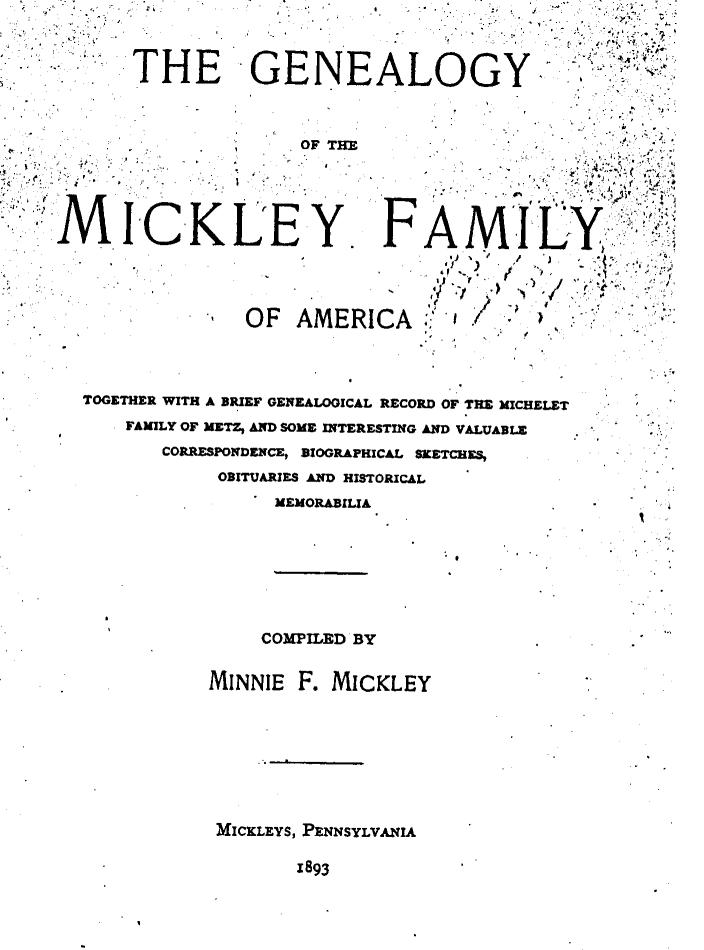
As far as I know, I am part French, Irish, Swiss, and German. My mom’s side has had an official research done and published in a hard copy book (cover page) that informs that the name Mickley was originally Michelet. My father’s side has had no formal search, but while in Switzerland, I was informed by the nuns where I was staying that a man across the street had my last name, Hammel. And there is a Hammelburg in Switzerland, however there is also a Hammelburg, Germany. My red hair and fair skin is shared by no one in my family. Since my father’s mother had the red hair gene, and I assumed she was Irish, I thought that is where I got the red hair. But when I was in Innsbruch, Austria, I met a young lady who had the exact color of red that I have now and the same complexion color. Red hair has many shades. Even my color has not remained the same. It was once darker. My mother’s mother told me once that there was someone black in my ancestry. No one else has ever mentioned this. I did have one black hair once. Who knows? And some wonderful Hopi told me I looked Cherokee while visiting in Priscilla Namingha
Nampeyo’s home in Arizona.

And although my mother “told” me as a child that all people were “equal”, it only played out as painful for me when I was attracted to one of two black boys while 11 years old at my
Yellow Creek Lake Church of God summer camp in northeastern Indiana . I never had met a black person before in my life, but didn’t think anything of it, as... well ... you know, something ~ WRONG to do. His name is Eddie Griffith and was from Gary, Indiana. His minister, Brother Cherry, was a camp counselor. He sang at one of the nightly church services, “No Not One”. A clear and sweet voice. I was “in love”. He was adorable. The only thing we ever did was hold hands, have two pictures taken together and exchange letters. But when those pictures and two letters mysteriously came up missing from my bedroom desk drawer without ever an explanation ~ I was crushed. I cried myself to sleep while smothering my sound into silence. It was only the second emotional pain of my life. And this was my first time of being hurt this way. I didn’t understand. My mother never explained. My father only made a passing comment that I didn’t want striped or polka dotted children, while waiting for the school bus one morning. (The first hurt had to do with a "just-hatched" bird ~ no feathers yet ~ I found on my mile walk home from school, that had been run over ~ when I was in third grade. I was going to nurse it back health, but my mother made me throw it away in the woods across the street from our house. That hurt.)

So when I once again had a black person in my life in my thirties, I knew what to expect. Disapproval. I was not wrong about that. When Mark and I decided not to get married, but to live together, we planned a “Commitment Ceremony” which we invited his parents, one friend each and my family. But when my family couldn’t condone our decision not to marry, it was better not to have that “aura” present. They have never approved of me in general. Just never fit the mold.

I have been thinking of race lately. White people can do that. Think about race only when it is convenient or when it suits us. If you are not white or don't look white, you don’t have that choice. It is thrown in your face daily. One of the people I met in New Hampshire while volunteering for the Obama campaign, said that the lady at the door she was canvassing wouldn’t touch her flyer about Barack, but was instructed to lay it down at the door. This young girl, looked fine to me. I didn’t ask her what her race was, but it struck me as puzzling because I didn’t see why someone would think she wasn’t white. I’m aware of racism, but even this was a mystery to me.

The host of where I was staying asked me if Richard Wolffe was black immediately when I showed him who he was. I didn’t get the reason for the question. What would it matter first of all unless it was an issue? And anyway, Richard doesn’t look black to me. So.

After Eddie, my 11 year old beau friend ~ my dad always would think I was some expert on whether someone was black or not. He would ask me if Leslie Uggams was black, etc.

These questions to me are telling. When my cousin pointed out that the people of Lousiana were black and his reason for explaining ~ in his mind~ their behavior during hurricane Katrina was because they were black, I found that a bigoted statement on a couple of levels. When I heard a family member, say that hurricane Katrina happened because all of the people in the area were evil, I thought this had bigoted undertones to the statement.

And when a couple people thought they were being open-minded and showing their acceptance of Mark, they said, that they didn’t think of Mark as black. My comment was to a family member, that Mark thinks of himself as black.

After 15 years, I am no longer living with Mark. But I miss his extended family. They opened my world. They welcomed me. I felt accepted by them. They have had to deal with white people their whole lives.

At our “Commitment Ceremony” we wrote our own “vows”. I included a small excerpt from SPORT OF NATURE By Nadine Gordimer. Below I have included this excerpt between the *….* but I have also included what follows this portion. I enjoy the differences. And I acknowledged the difference by using this passage. Why pretend? I see no reasons. Part of the enjoyment of life is to see the beauty and differences can be beautiful. I love skin. There is nothing like touching skin. Body to body. It’s quite a gift given to us to enjoy. I know it makes some people cringe to think of white skin and not-white skin touching, but I’m not one of those people.

* Lying beside him, looking at pale hands, thighs, belly: seeing herself as unfinished, left off, somewhere. She examines his body minutely and without shame, and he wakes to see her at it, and smiles without telling her why: she is the first not to pretend the different colours and textures of their being is not an awesome fascination. How can it be otherwise? * The laws that have determined the course of life for them are made of skin and hair, the relative thickness and thinness of lips and the relative height of the bridge of nose. That is all; that is everything. The Lilliesleaf houseparty is in prison for life because of it. Those with whom she ate pap and cabbage are in Algeria and the Soviet Union learning how to man guns and make bombs because of it. He is outlawed and plotting because of it. Christianity against other gods, the indigenous against the foreign invader, the masses against the ruling class ~ where he and she come from all these become interpretative meanings of the differences seen, touched and felt, of skin and hair. The laws made of skin and hair fill the statute books in Pretoria; their gaudy savagery paints the bodies of Afrikaner diplomats under three-piece American suits and Italian silk ties. The stinking fetish made of contrasting bits of skin and hair, the scalping of millions of lives, dangles on the cross of Christ. Skin and hair. It has mattered more than anything else in the world. Page 177

More text in the comment section...

.........................................................

.........................................................
Emily faced racism in her family. But her family has come around.

Labels: , , , , , , , , , , , , , , , , ,